Published
How to Water a Staghorn Fern: Soaking, Pouring or Misting, and What to Do With a Board Too Big to Move
Soaking is the main method for a mounted plant: submerge the board until the bubbles stop. Bone-dry sphagnum repels water, so pouring over the top rarely reaches the roots; for a board too big to move, pour slowly in two passes; misting adds humidity and never replaces watering.
How often to water is a matter of judgement; how to water is a matter of method. Once the sphagnum on a mount dries out it repels water, and with the wrong method the water simply never gets in. This piece covers method only; for timing, see how often to water.
Soaking: the main method for a mounted plant
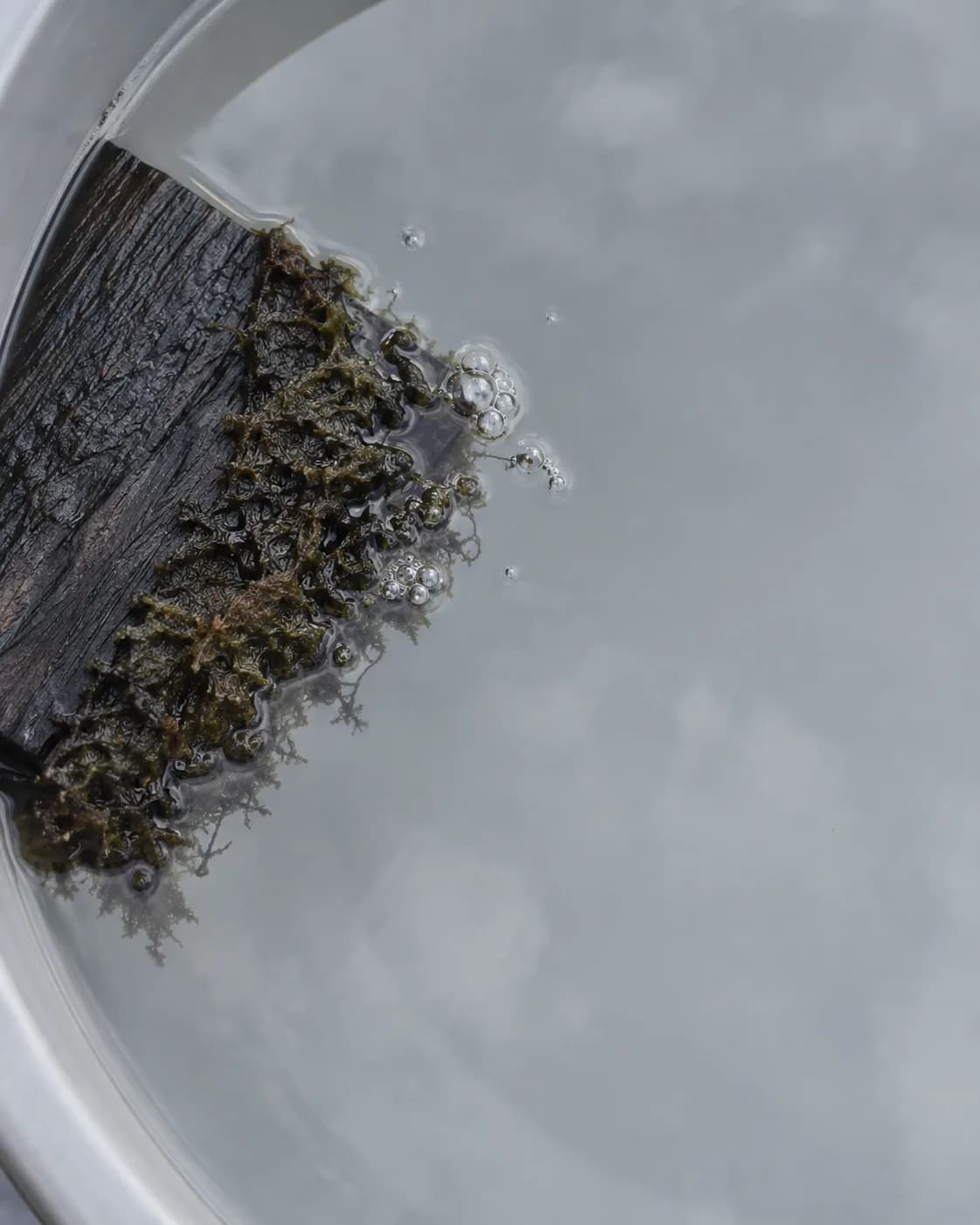
Submerge the whole board so the water covers the depth of the sphagnum, and watch the bubbles: a steady stream means water is entering the medium, and once bubbling stops it has taken up all it can, usually within three to five minutes, though most sources allow up to 10 to 30 minutes. It will feel noticeably heavier when you lift it out. Drain and rehang. Bone-dry sphagnum repels water; pouring often wets only the surface, while soaking reaches the roots.
Pouring: when the board is too big to move
Aim the water at the medium, not at the face of the shield, and never let it pool in the growing point. Water until it runs out of the back of the board, wait thirty seconds, then water once more. If you are set on pouring, cut a small hole in the top of the moss and pour straight into it, staying clear of the growing point; it noticeably improves how much the moss takes up. Once sphagnum has gone bone dry, pouring barely gets any water in: it runs along a few channels and out, leaving the outer layer wet and the core still dry, with no real change in weight — which is exactly why a fully dry mount needs a soak, not a pour.
Protecting the white hair, avoiding shared water: watering slowly
When a plant is too large to soak comfortably, or you want to avoid rubbing the white hair on the fronds, or several plants share one basin and you're wary of spreading disease between them, switch to a slow pour instead: wet the surface lightly first, water the other plants, then come back for a second pass; switch the nozzle to a fine mist to cut the force of the stream; or set a water-soaked sponge on top of the moss, or an inverted bottle, to let water drip in slowly.
Misting: not watering
The trap with misting is looking wet on the outside while staying dry within: the surface glistens but the sphagnum underneath is bone dry. When the moss is only lightly damp, a few light spritzes from a spray bottle, repeated until the moisture feels even from top to bottom, can help; but once the moss has gone fully dry, misting just runs off the surface and never gets in, and that is when you soak instead of spraying harder. Daily misting of the fronds keeps the growing point wet for hours at a time. If you want humidity, run a fan with a humidifier; do not let a spray bottle stand in for a soak. In winter, aim for the moss about seven-tenths damp rather than fully soaked, but the water still needs to reach the core, not just the surface.
In one line
Soak a mounted plant first; pour only when it cannot be moved, and pour slowly; misting adds humidity and never replaces watering.
FAQ
How long should I soak a staghorn fern?
Until the sphagnum stops bubbling, roughly 10 to 30 minutes in most sources. Bone-dry moss repels water, so pouring often wets only the surface; soaking is the default for mounted plants. Drain before rehanging, and make sure air moves over the board so the surface dries within a few hours.
Can I just mist my staghorn fern instead of watering it?
No. Misting raises humidity for a few minutes while the medium stays dry, and daily misting keeps the growing point wet for hours, which is a common route to crown rot. Soak the mount when the medium is dry; if you want humidity, use a fan with a humidifier. A spray bottle is not a substitute for watering.