Published · Updated
Discoloured Fronds on a Staghorn Fern: Normal Ageing or a Real Problem?
A browning shield frond is normal. The oldest fertile frond yellowing is normal. Do not reach for the scissors. Three questions, which frond, what colour, what texture, sort out what is normal ageing from what needs attention, and cover the common causes behind yellowing, curling and drooping. Blackening and crown rot, the more urgent cases, get their own article.
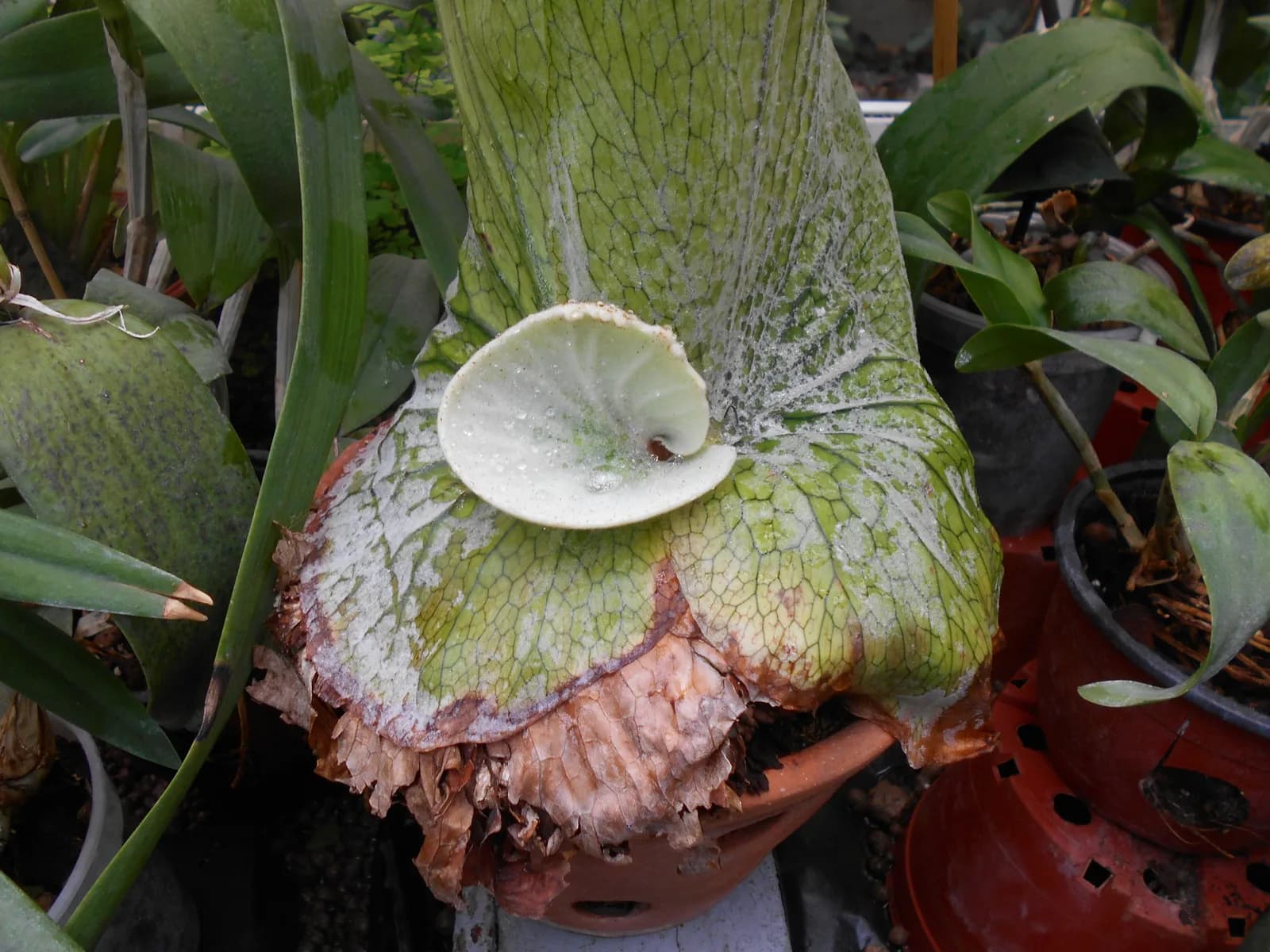
Three questions before anything else: which frond, what colour, what texture
A staghorn fern (Platycerium) has only two kinds of frond: the shield frond pressed against the board, and the fertile fronds that reach out. The same colour on a different frond means a different thing. Before you act, ask three questions. Which frond? What colour? Does it feel dry and crisp, or soft and wet? Crisp damage is usually light, wind or humidity, and you have time. Soft damage is usually water and rot, and you deal with it today.
Rule out the normal first: brown shields and yellow old fronds
A shield frond browning from the edge inward, thinning, turning papery is normal ageing. Shields are meant to brown layer by layer, wrap the board and become the plant's own substrate. Do not peel or cut them; the next shield grows over the top. Even once a shield has weathered down to something papery-thin, leave it in place: peeling it off risks damaging the roots and growing point underneath. P. willinckii and P. hillii shields brown especially early, and that is normal too.
The oldest one or two fertile fronds yellowing and loosening is normal turnover, especially in late autumn. P. elephantotis and P. wallichii go further: in cool weather the fertile fronds yellow and drop, and every shield browns. That is dormancy. Part the shields and check the growing point; if it is firm, nothing is wrong.
Judge by position and texture: browning that runs from the edge inward and feels dry and brittle is normal, while a shield that blackens at the centre and feels soft, sometimes with a smell, is usually water damage from water sitting at the base of the frond for too long, and calls for longer intervals between waterings and better airflow. Only two patterns should worry you: the newest shield browning too, and every fertile frond changing colour at once rather than just the old ones. Seeing a shield brown does not mean reach for water damage first. Check whether the fertile fronds are still growing and whether the growing point looks full; browning is usually the plant recycling nutrients from an old frond, a bump taken during mounting, or a pressure mark from a tie. Work through it in order: first the fertile fronds and growing point, then whether the brown patch keeps spreading and turning soft or black, then whether the growing point has been sealed over by a new shield. Only chase water damage if the medium has stayed soaked with a smell and the patch keeps spreading, softening and blackening.
A new shield has sealed over the growing point
A newly forming shield sometimes curls fully inward and seals over the growing point, trapping the next frond beneath it before it can emerge. Use a clean craft knife to cut a small slit at the sealed spot, keep the cut as small as possible, avoid the growing point itself, and there is no need to treat the wound. Care continues as normal afterward.
Turning yellow
All the fertile fronds yellowing and drooping in summer. Too little light or too little water. P. elephantotis drinks hard in summer and yellows first when dry. Soak once; if there is no recovery in a day or two, check the roots.
Yellow on the sun-facing side only, after midday sun. Scorch. P. hillii, P. madagascariense and P. ellisii are the quickest to burn. Move to filtered light. Yellowed tissue will not turn green again, but new fronds will come in normally.
Shields bleaching to pale yellow-white. Too much light. Add shade.
Old fertile fronds yellowing and dropping in the cold season. Dormancy or normal turnover, as described above under rule out the normal first.
Curling and drooping
Fertile fronds rolling inward. On P. stemaria and P. andinum this is a water-saving response to dry air or a dry mount, and a soak opens them again. P. quadridichotomum rolling into tubes and P. wallichii curling in cold weather is dormancy.
Fertile fronds drooping. Light first, then water. Too little light stretches and softens the fronds and turns silver to green; too little water drops the whole frond, and a soak brings it back within a day or two. If a soak does not bring it back, the roots are the problem.
If what you are looking at is a black, soft growing point or a dark, spreading patch on the shield, that needs action today: see Blackening Fronds and Soft Growing Points. If it is a crisp brown tip, a firm brown spot, or something living in the shield layers, none of that is urgent, but it will not get better on its own: see Crisp Edges, Brown Spots and What Lives in the Shield Layers.
FAQ
My staghorn fern's shield frond is turning brown. Is that normal, and should I remove it?
Normal, and leave it on. Shield fronds are meant to brown from the edge inward, turn papery and wrap the board as the plant's own substrate; the next shield grows over the top. Two exceptions: the newest shield browning as well, or dark, soft, spreading patches, which point to the environment or water damage.
Are yellow staghorn fern fronds a sign of thirst or sunburn?
Look at the pattern. All fertile fronds yellowing and drooping in summer usually means too little water or light: soak once and watch for a day or two. Yellow on the sun-facing side only, after midday sun, is scorch: move to filtered light. The oldest fertile fronds yellowing and dropping in the cold season is dormancy or normal turnover, especially on elephantotis and wallichii.
My staghorn fern's fertile fronds are drooping. Is it thirsty?
Check light first, then water. Too little light stretches and softens the fronds and turns silver to green; only more light fixes that. Thirst drops the whole frond and the board feels light; a soak brings it back within a day or two. If a soak does not bring it back and the fronds start to yellow, the roots or the growing point are the problem, and the medium has probably been too wet for too long.
A frond split or got bent. Will it grow back?
The tear will not heal, but there is usually no need to cut the frond. Once a frond has unfurled it cannot grow tissue to close a wound, so the split simply sets as the frond grows, and the frond keeps photosynthesising. If the growing point is healthy, the next round comes up normal. Watch instead for edges that turn dark brown, go soft and spread day by day: that is water damage or infection, so check whether the medium stays wet and whether there is enough air movement. New fronds are softest while unfurling, so move the plant and turn the board as little as possible then.
Related species