Published
Staghorn Fern Fronds Turning Black, Yellow or Brown: Water Damage, Sunburn, Crown Rot, or Normal Ageing
A browning shield frond is normal. The oldest fertile frond yellowing is normal. Do not reach for the scissors. The only thing that needs action today is a black, soft growing point. Three questions, which frond, what colour, what texture, sort black, yellow, brown tips, brown spots and curling into causes and fixes, with notes on ridleyi, madagascariense and bifurcatum.
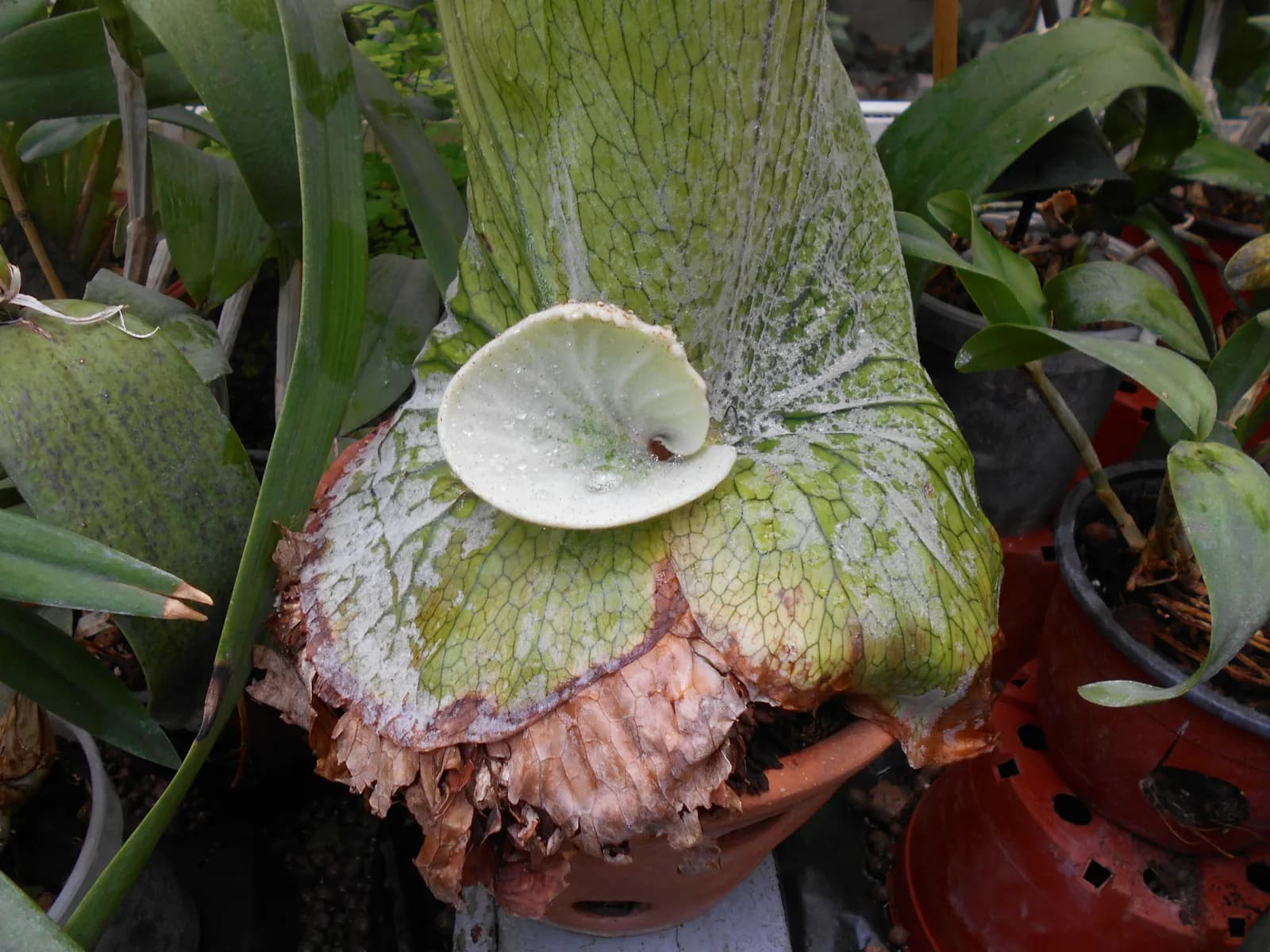
Three questions before anything else: which frond, what colour, what texture
A staghorn fern has only two kinds of frond: the shield frond pressed against the board, and the fertile fronds that reach out. The same colour on a different frond means a different thing. Before you act, ask three questions. Which frond? What colour? Does it feel dry and crisp, or soft and wet? Crisp damage is usually light, wind or humidity, and you have time. Soft damage is usually water and rot, and you deal with it today.
Rule out the normal first: brown shields and yellow old fronds
A shield frond browning from the edge inward, thinning, turning papery is normal ageing. Shields are meant to brown layer by layer, wrap the board and become the plant's own substrate. Do not peel or cut them; the next shield grows over the top. P. willinckii and P. hillii shields brown especially early, and that is normal too.
The oldest one or two fertile fronds yellowing and loosening is normal turnover, especially in late autumn. P. elephantotis and P. wallichii go further: in cool weather the fertile fronds yellow and drop, and every shield browns. That is dormancy. Part the shields and check the growing point; if it is firm, nothing is wrong.
Only two patterns should worry you: the newest shield browning too, and every fertile frond changing colour at once rather than just the old ones.
Turning black
The growing point is black, soft, and dents when pressed. Crown rot. This is the one true emergency in this article. The cause is almost always water sitting in the crown plus still air. P. ridleyi, P. madagascariense and P. andinum are the most susceptible, and humid summer heat and cold wet winters are the two peaks.
One or more dark brown, soft, spreading patches on the shield. Water damage. Most sources separate it from sunburn this way: water damage is dark, soft and wet-looking; sunburn is pale, dull, dry and does not spread. It usually follows watering onto the face of the shield, or a board tilted so water pools in the centre.
Black tips on the fertile fronds. Three directions. Chronically low humidity or a fan blowing straight at the plant; fertiliser burn; or cold damage during a cold snap, since species like P. coronarium blacken their fertile fronds below about 10 °C. The timing tells you which.
Black sticky spots with small brown bumps nearby. Scale insects. Turn up the rim of the shield and look at the base of the fertile fronds; small round brown shells are the giveaway. Scrape them off and improve airflow.
Turning yellow
All the fertile fronds yellowing and drooping in summer. Too little light or too little water. P. elephantotis drinks hard in summer and yellows first when dry. Soak once; if there is no recovery in a day or two, check the roots.
Yellow on the sun-facing side only, after midday sun. Scorch. P. hillii, P. madagascariense and P. ellisii are the quickest to burn. Move to filtered light. Yellowed tissue will not turn green again, but new fronds will come in normally.
Shields bleaching to pale yellow-white. Too much light. Add shade.
Old fertile fronds yellowing and dropping in the cold season. Dormancy or normal turnover, as above.
Brown tips, brown edges, brown spots
Fertile frond tips brown, dry and crisp. Sunburn, dry moving air, or humidity that sits below roughly 50% for long periods. On P. bifurcatum this shows up most often on a west-facing wall or under an air-conditioner vent. Hard water or frequent feeding leaves a white crust on the medium and burns tips the same way; flush the mount with plain water.
Round brown spots on the frond surface. Water left standing on the leaf, or poor airflow. The broad fronds of P. elephantotis show it most; P. quadridichotomum spots in direct sun.
Scattered small brown spots that are not soft. Too wet with too little air. Classic on drought-adapted species such as P. veitchii and P. willinckii; cut water and add a fan.
Shield edges cracking dry. Low humidity. Large-shielded P. wandae shows it first; most sources put the threshold around 50%.
Curling and drooping
Fertile fronds rolling inward. On P. stemaria and P. andinum this is a water-saving response to dry air or a dry mount, and a soak opens them again. P. quadridichotomum rolling into tubes and P. wallichii curling in cold weather is dormancy.
Fertile fronds drooping. Light first, then water. Too little light stretches and softens the fronds and turns silver to green; too little water drops the whole frond, and a soak brings it back within a day or two. If a soak does not bring it back, the roots are the problem.
What to do about crown rot
Part the shields and look at the growing point. If it is still green and firm, tilt the board to drain the crown, stop watering for a week, add airflow and move the plant into softer light; that usually halts it. If the point is already black and soft, most sources describe cutting the rotted tissue back to healthy material, dusting with a fungicide or cinnamon, withholding water and increasing airflow, then waiting for a new bud. The success rate is low, especially on single-crown species that never pup, such as ridleyi, P. wandae and P. grande. On species that pup, such as P. madagascariense, bifurcatum and elephantotis, a pup often takes over when the mother crown is lost. The real work on crown rot is prevention: water the medium, not the crown; tilt the board slightly forward; keep the fan on.
FAQ
My staghorn fern's shield frond is turning brown. Is that normal, and should I remove it?
Normal, and leave it on. Shield fronds are meant to brown from the edge inward, turn papery and wrap the board as the plant's own substrate; the next shield grows over the top. Two exceptions: the newest shield browning as well, or dark, soft, spreading patches, which point to the environment or water damage.
My staghorn fern is turning black. Can it be saved?
It depends where. Black frond tips or a dark patch on the shield usually recover once watering and airflow are corrected. A black, soft growing point is crown rot: if any green remains, tilt to drain, stop watering for a week and add air; if it is fully black and soft, cut back the rot, dust with fungicide and withhold water, though the odds are poor. On species that pup, a pup often takes over.
Are yellow staghorn fern fronds a sign of thirst or sunburn?
Look at the pattern. All fertile fronds yellowing and drooping in summer usually means too little water or light: soak once and watch for a day or two. Yellow on the sun-facing side only, after midday sun, is scorch: move to filtered light. The oldest fertile fronds yellowing and dropping in the cold season is dormancy or normal turnover, especially on elephantotis and wallichii.
My staghorn fern's fertile fronds are drooping. Is it thirsty?
Check light first, then water. Too little light stretches and softens the fronds and turns silver to green; only more light fixes that. Thirst drops the whole frond and the board feels light; a soak brings it back within a day or two. If a soak does not bring it back and the fronds start to yellow, the roots or the growing point are the problem, and the medium has probably been too wet for too long.
Are the brown fuzzy patches under my staghorn fern's fronds a disease?
Usually not. A large, even patch of brown felt on the underside of a frond tip is the spore patch, a normal sign of maturity; on ridleyi and coronarium the spores sit on a separate spoon- or kidney-shaped lobe instead. Worry about small round brown shells scattered irregularly, which lift off with a fingernail and leave sticky residue or black spots: that is scale. Scrape them off and improve airflow.
Related species