Published
How to Divide a Staghorn Fern Pup: Tools, Pulling, Cutting, Aftercare
Which tools to have ready, why most pups come off by pulling rather than cutting, how to cut when the roots are tangled too deep to see, and a day-by-day plan for light, water and air through the first two weeks.
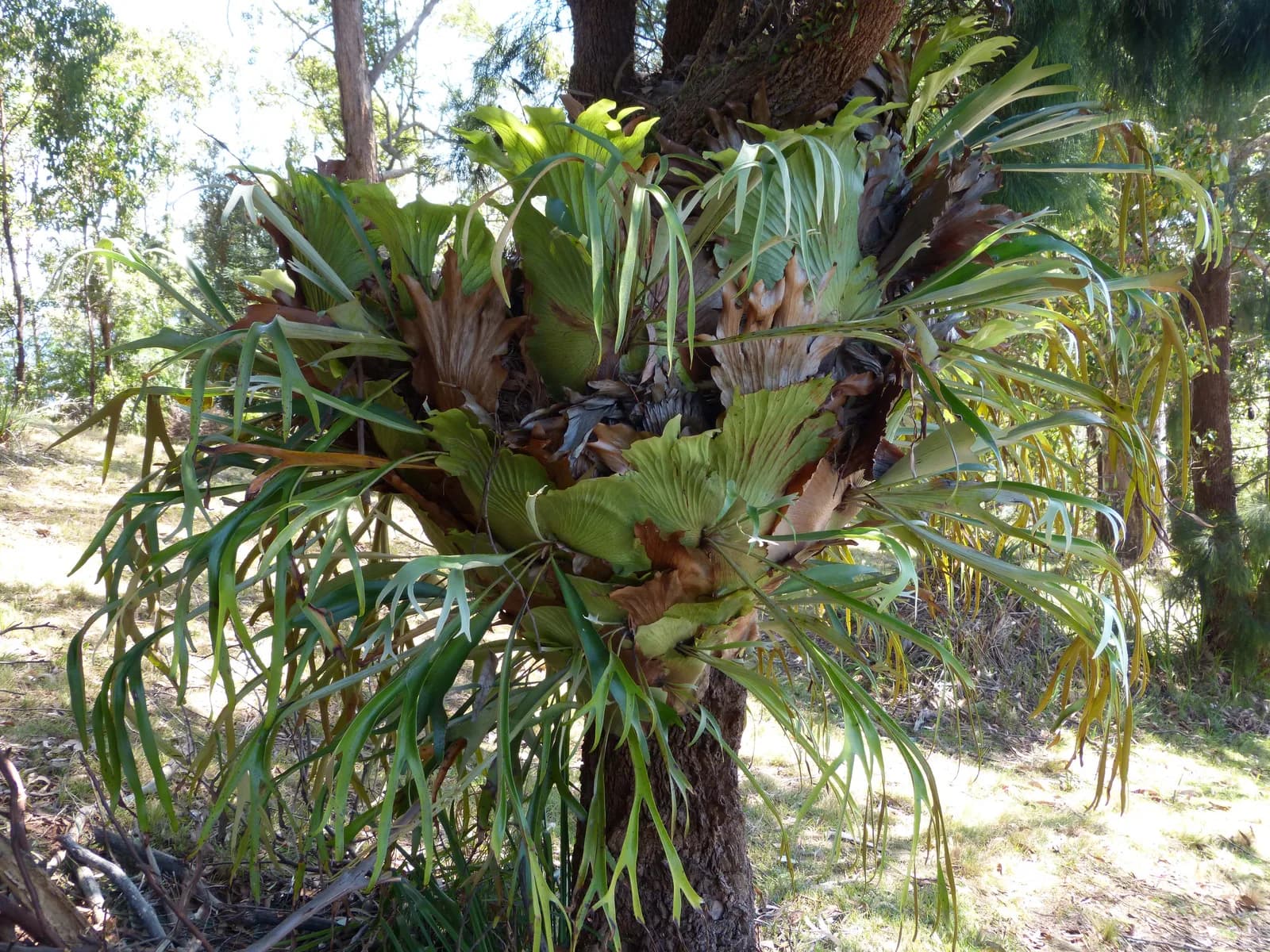
With timing decided, what is left is the hands-on part: which tools to have ready, how to pull or cut a pup free, and how to care for it through the first two weeks. Timing is covered in When Is a Staghorn Fern Pup Ready to Divide?.
Tools
A sharp blade (a craft knife, grafting knife or thin paring knife), wiped with alcohol or passed through a flame. A small handful of fresh sphagnum, soaked and wrung to barely damp. A small board or cork slab. Fishing line or cotton thread. Cinnamon or charcoal powder for the cut is optional. Also useful: a small clamp with an angled tip for pups still in a seedling basket, a lever-style weeding tool for pups already mounted, and an orchid net pot to root a divided pup. Do not tear a pup off with blunt scissors; a ragged wound rots far more readily than a clean cut.
How to divide
Most pups come off by pulling; keep the knife for pups whose roots are tangled too deep into the mother's old shield fronds and moss to see which way they run. If the mother's moss has dried hard, soak the whole mount first; damp roots are far less likely to snap. Find where the pup joins the mother, usually a short rhizome buried between old shield fronds and moss, and part the medium to see where its own roots run. If there is a plastic mesh backing, cut it open and lift the whole piece out.
Pull, do not cut. Scissors are more likely to injure the mother's root system, and a damaged root system is less likely to throw another round of pups. For a pup still in a seedling basket, slide a small angled clamp in from below, close it behind the growing point where root meets crown, and pull outward; the whole pup comes away with its roots attached. If several are stacked together, take the outermost one first. For a pup already mounted, use a lever-style weeding tool instead, setting its notch against the spot right behind the growing point and prying gently.
Cut only when you cannot see the roots. Cut from the mother's side, taking a small piece of old tissue and the roots along with the pup — better to take a little too much of the mother's old shield than to nick the pup's growing point. One decisive stroke, not a sawing motion. Let both cuts dry in the shade for a few hours to a day; the mother's wound needs no dressing, only airflow.
Mounting the pup: wrap the roots in barely damp sphagnum, set it against the board with the growing point upright and tilted slightly forward, and tie it on. Do not pack the moss tight or pile it so high that it covers the shield.
The first two weeks
A pup with a full set of roots can go straight onto a board, or be potted first in an orchid net pot filled with sphagnum, packed firm enough that it does not shift.
Days one to three: no soaking. The moss went on damp and carries the pup through; mist the air around it, not the growing point. Bright filtered light, never direct sun, and gentle air. Days four to seven: give the first light watering only once the moss surface has dried, from the side. A shield collapsing flat means the roots have not taken. Week two: hold the same filtered light, gentle air and barely damp moss; most sources advise no feeding for the first month. A shield that tightens again, or a new root tip, means the pup has taken; full establishment usually takes two to three months. The mother needs the same restraint — hold off on heavy watering until her wound has finished drying.
The three problems that most often come up after dividing — too few roots, twin crowns, a blackening mother — are covered in Three Problems When Dividing Pups; timing is covered in When Is a Staghorn Fern Pup Ready to Divide?.
FAQ
Will the pup die after I remove it? What is the success rate?
If it met the three conditions, the cut was clean, it got no soaking for the first three days and sat in filtered light with gentle air, most survive. The three main killers are forcing off a pup too small, nicking the growing point, and soaking plus direct sun straight after division. We do not quote a percentage; species and conditions vary too much.
Should I water a pup right after dividing it?
Do not soak it. The sphagnum it was mounted in is already damp and carries it through the first three days; mist the air around it, not the growing point. From day four to seven, give a light watering from the side only once the moss surface has dried. Most sources advise no feeding for the first month, and the pup is established once a new frond moves, usually after two to three months.