Published
Reading a Sporeling: Thick or Odd Fronds, Spotting a Dwarf Early, and When to Mount
Sporelings segregate, so a seller's thick fronds and white hair describe the batch, not your plant. Odd juvenile fronds are usually temporary; a dwarf takes years to confirm; mount only when leaf-change and rooting have both happened.
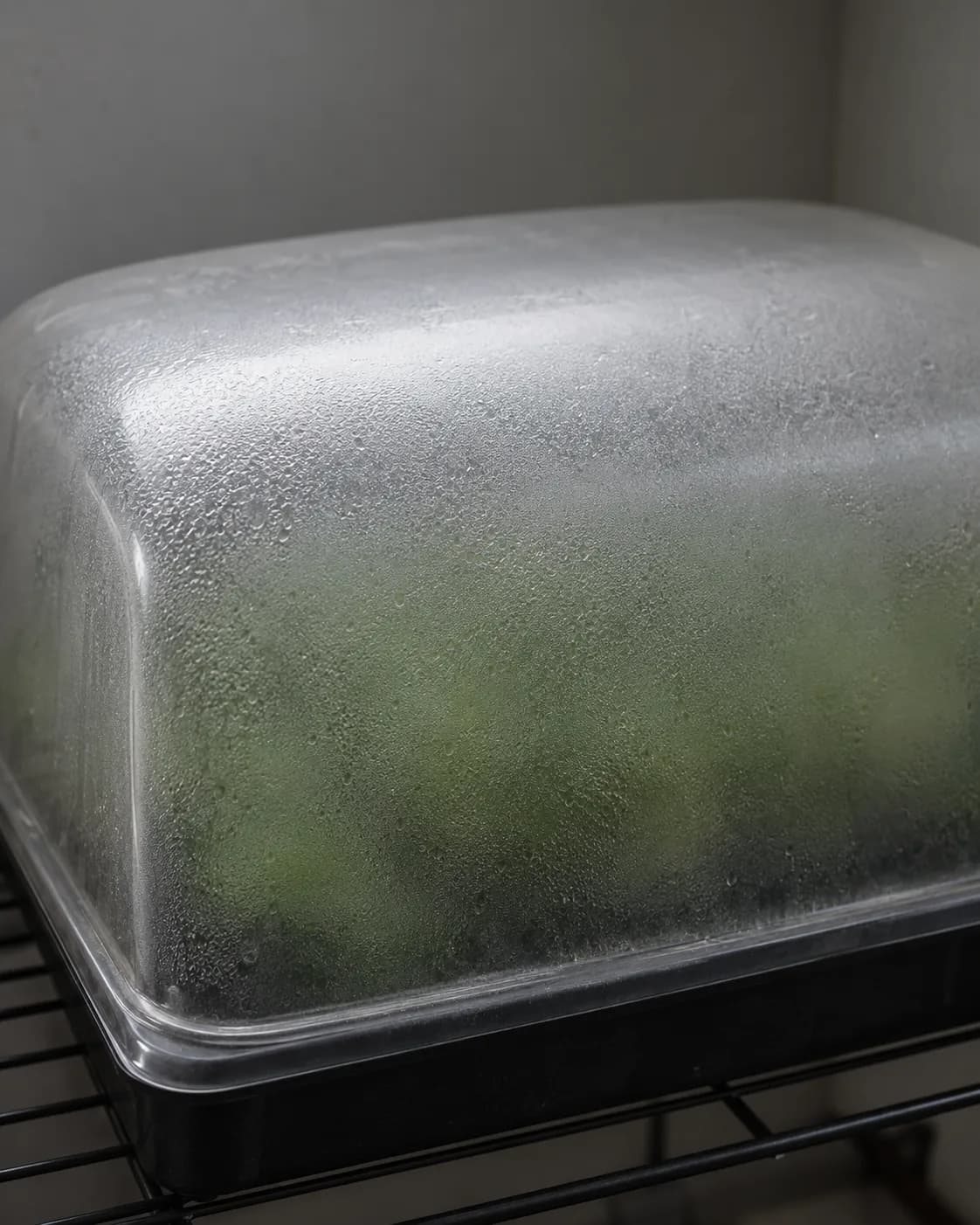
A sporeling is the mother plant's child, not its copy, and every sowing segregates. So what a seller describes as thick fronds, a heavy coat of white hair or a striking vein pattern is a tendency across that batch, not a guarantee for any one plant. Once one is in your hands, these are the three questions that come up most. For how sporelings differ from pups and tissue culture, see pups, sporelings and tissue culture.
Is a 'thick' or 'unusual' frond a lasting trait, or just juvenile variation?
Trade listings often describe sporelings as 'thick-fronded', 'proliferating' or simply 'unusual'. Within a single sowing, frond thickness, fork density, hair cover and the shape a shield wraps the board all vary naturally, and an occasional curled edge or odd fork shows up too. Most of this is juvenile and temporary: the first few fronds are easily thrown off by low light, swinging humidity or roots that have not yet spread, and shape usually settles back to the species' norm once the plant has established. Frond thickness in particular can be a response to strong light rather than lineage, and it thins again under weaker light. The way to tell is simple: watch whether the next several fronds keep repeating the same trait.
Can you spot a dwarf sporeling early?
Growers rely on a handful of tells: unusually thick fertile fronds, irregular thick white fuzz appearing early, a frond shape that looks off from the standard form, and a keeled bud that often shows up once the plant reaches a two-inch pot. None of it is a guarantee; confirming a dwarf usually takes several years of growing on. That uncertainty is part of the appeal of raising from a sporeling, the chance of ending up with a genuinely one-of-a-kind plant. Bud health is more straightforward to read: it should be full, plump and near-black green, and a freshly emerging frond is covered in dense white fuzz but very fragile, so handle it carefully when moving the plant.
Leaf-change and rooted-in: when a sporeling is ready to mount
Leaf-change marks the end of the seedling stage: the small, round juvenile fronds give way to forked fertile and shield fronds closer to adult form, and tolerance for light and humidity swings rises noticeably once it happens. Rooted-in means the roots have gripped the medium — lift the plant gently and it should not come loose, nor should the medium crumble apart. Only mount once both signs are true; if it has changed leaves but is not yet rooted, or is rooted but still in juvenile leaf, keep it in its seedling pot a while longer. For the first two weeks after mounting, hold humidity steady and avoid moving it; a new frond pushing out means it has taken.
In one line
A seedling's looks change, so judge by the next few flushes; a dwarf takes years to confirm; mount only when leaf-change and rooting have both happened. For stage-by-stage care see caring for young and potted plants; for a mixed sowing see what to do with a mixed sporeling.
FAQ
My sporeling has thick or odd-looking fronds. Is it a variant?
Usually not. The first few flushes are easily shaped by light, humidity and roots that have not yet spread, so curled edges or odd forking are often temporary, and thick fronds may just be a response to strong light that thins out in lower light. Watch whether the next few flushes keep the same form.
When can a sporeling be mounted?
When both signals are there: the juvenile leaves have given way to forked fertile fronds and shield fronds close to the adult form, and the plant does not lift loose or crumble its medium when you tug it gently. With only one of the two, keep it in its pot.