Published
Staghorn Fern Sporeling Care: Pot Stage, Growth Milestones, and When to Mount
The first thing that fails on a staghorn fern sporeling is rarely light, it is temperature and water. From windowsill care for the smallest sporelings and the wrung-towel standard for sphagnum moisture, through cycling once the first fertile fronds appear, to humidity domes, grow lights, and knowing when a pup or a sporeling is actually ready to mount.
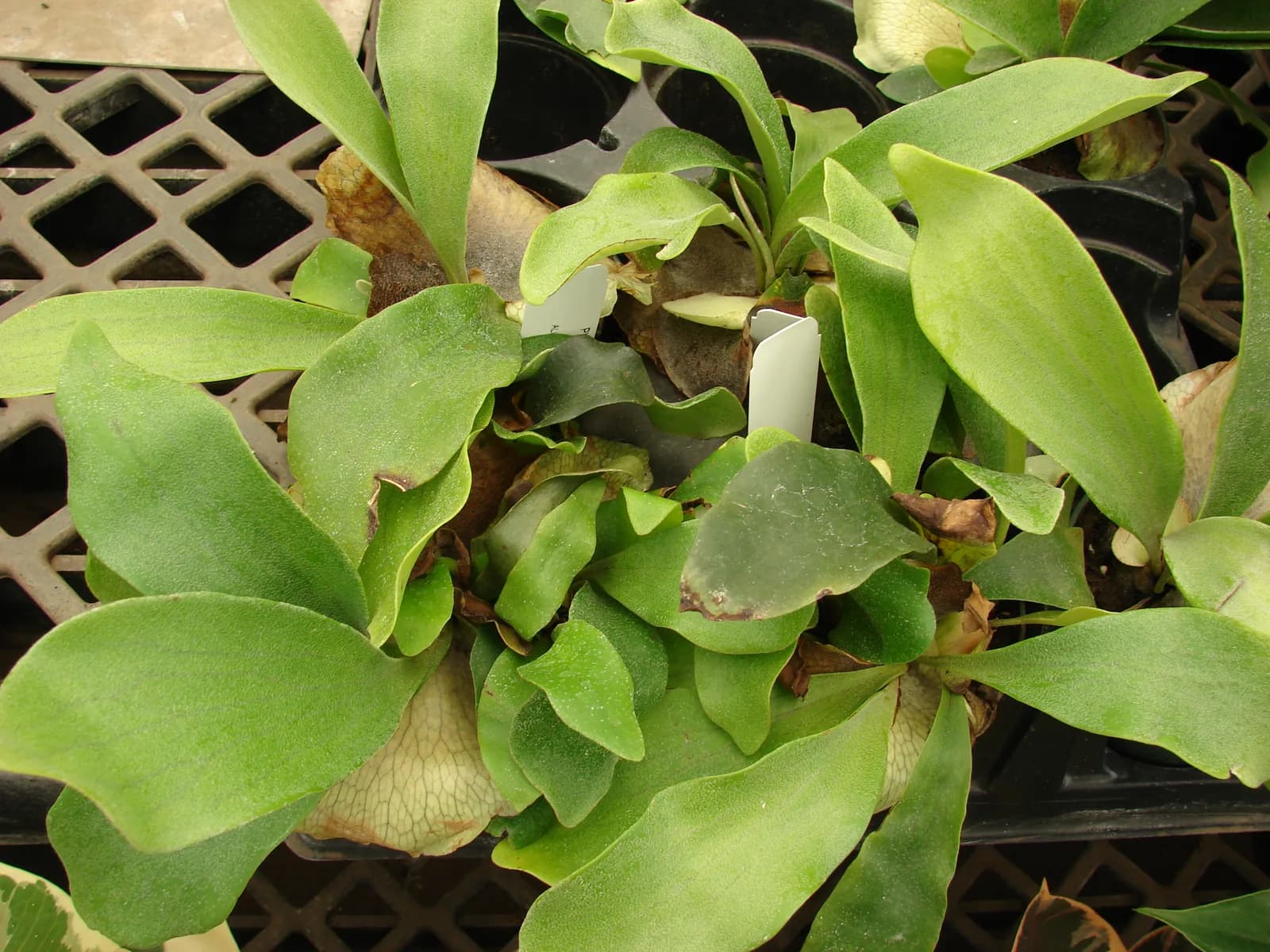
What kills a sporeling is temperature and water, not light
New growers spend most of their attention on light, but nine sporelings out of ten that fail are lost to temperature and water, not light. The smaller the plant, the narrower its tolerance: diffused light a mature plant enjoys on a balcony can be too intense for a sporeling in a 1.5-inch pot, and a wet-dry cycle a mature plant handles easily can dehydrate a seedling in a day. Put light lower on the list for a sporeling, and water and temperature first.
The smallest sporelings: a windowsill beats a balcony
At around 1.5 inches, a sporeling is an infant, more sensitive to temperature than at any later stage, and not suited to a balcony. Even without direct sun, the daily swing in temperature and the intensity of diffused light on a balcony are still too much. An air-conditioned indoor windowsill, even a slightly dim one, is the safer choice. Never soak at this stage: with so little root, soaking invites rot fast, and the fronds go soft along with it. Mist the pot rim and moss surface instead, holding the moss at roughly seventy percent moisture and topping up once it drops to around thirty percent, since letting it go too dry scorches the fronds. Given decent conditions, a sporeling moves up a full size class in about six to eight weeks, and that is usually the point where it becomes forgiving enough for a first-time grower to take over.
Sphagnum moisture: the wrung-towel standard
The test is simple: wet to the touch but nothing squeezes out, like a towel wrung dry. Water in two or three passes rather than one: mist once to wet the surface and start it soaking in, wait a few minutes, then mist a second and third time so water actually reaches the interior of the moss where the roots can use it. Never aim a strong jet of spray straight at the growing point; the force alone can damage tissue that is still fragile. This standard differs from the mature-plant test in How Often to Water a Staghorn Fern: a mature plant is read by the weight of the board and the shield frond, a sporeling is read by how the moss itself feels.
After three or four fertile fronds: cycling can begin
Once a sporeling carries three or four fertile fronds and the roots have filled out, its light requirement rises and a wet-dry cycle can start, but the operative word is cycle, not drought. A potted sporeling still cannot tolerate a long, full dry-down the way a mature mount can, so keep the swing between wet and dry much narrower. It is normal at this stage for the lowest, smallest fronds to yellow or spot with small black marks before they have even fully opened. As long as the newest growth stays healthy and normally coloured, that is ordinary turnover, not a problem to fix.
Speeding growth: humidity domes and grow lights, within limits
A clear humidity dome over the pot raises moisture and steadies temperature, useful for pushing growth, but the air inside must stay below 32°C; leave a domed sporeling on a summer balcony and it effectively steams. Under an indoor grow light, keep at least 35cm between the light and the plant; any closer scorches fronds and leaves them thin and weak. If a pup or sporeling arrives wrapped in plastic film, the first thing to do is remove the wrap so air can reach it. Leaving it sealed is a faster route to crown rot than any amount of underwatering.
When it is ready to mount
Pups and sporelings are judged differently. A pup can go straight onto a mount once its roots are sufficient, regardless of size, because it is already a small copy of the mother plant. A sporeling needs a new shield frond of its own and a growing point that has stopped feeling soft before it is ready. This has nothing to do with which of the three origins in Pup, Sporeling or Tissue Culture it came from; it is purely about the roots and the bud in front of you right now.
Mount too early and the consequences are immediate: the roots cannot grip the medium, the shield frond sags under its own weight, growth visibly slows, and the whole plant can work loose and fall. Waiting one more growing cycle beats mounting early for the sake of appearance.
For species with a naturally upright habit, such as P. hillii, tilting the pot slightly while it is still potted lets the fronds start growing at roughly the angle they will hold once mounted, so there is less correcting to do later.
One habit
Most sporelings lost in their first six months are not lost to hunger or sun; they are lost to being watered and sealed to death out of good intentions. Check how wet the moss actually is before reaching for the mister; it beats any fixed schedule.
FAQ
Can I keep a staghorn fern sporeling on a balcony?
Not the smallest ones. Even without direct sun, the daily temperature swing and diffused light intensity on a balcony are too much for a young sporeling; an indoor windowsill is safer. Once it carries three or four fertile fronds and its roots have filled out, it can tolerate a well-ventilated, filtered-light balcony spot.
How often should I water a potted staghorn fern sporeling?
There is no fixed schedule; read how the sphagnum feels. A wrung-towel dampness is the target, and you water again once the surface pales and no longer feels cool to the touch. For the smallest sporelings, use fine misting to hold roughly seventy percent moisture instead of soaking.
How big does a staghorn fern sporeling need to be before mounting?
A pup can be mounted once its roots are sufficient, regardless of size. A sporeling needs a new shield frond of its own and a growing point that has firmed up and stopped feeling soft. Mounting too early leaves the roots unable to grip the medium, sags the shield under its own weight, and visibly slows growth.
Related species