Published
Staghorn Fern Glossary: The Words Nobody Explains at Markets and in Listings
Shield frond, growing point, single-crown, prothallus, wild-collected, high crown, true pup, emergency pup, mother-plant expression, established roots, pot-bound, unnamed "special". These turn up constantly in listings and live sales and are almost never explained.
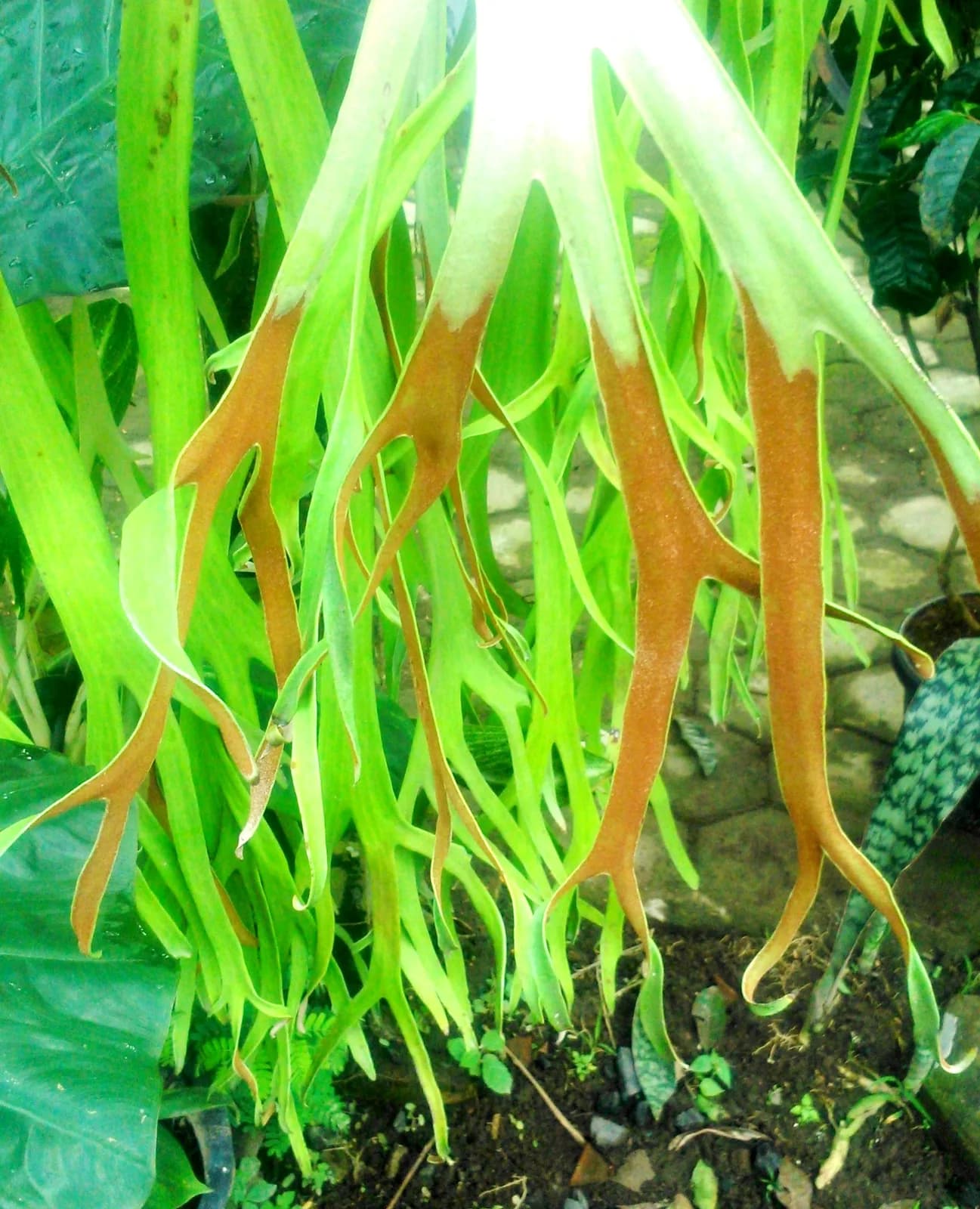
Parts of the plant
Words that come up constantly at markets and on livestreams but rarely make it into a listing title. The frond that lies flat against the board and takes in water is the shield frond (also called the sterile frond); the frond that forks outward and carries spore on its underside once mature is the fertile frond. The small green dot at the centre of the plant is the growing point — never touch it. Single-crown species produce one crown for life and never pup; multi-crown species keep producing pups once mature, and a mature plant currently supplying pups or spore is a mother plant (pup, sporeling and tissue culture are explained above). Spore first grows into a prothallus, which fertilises into a sporeling — roughly eighteen months from spore to sale size. Sowing spore from more than one parent together, so the prothalli cross-fertilise, is one form of mixed sowing, harder still to trace; wild-collected means taken directly from the wild. A dwarf is an individual noticeably smaller than others of the same species; the white fuzz on a fertile frond is prized the whiter it is, but it never grows back once rubbed off; a high crown describes a shield frond with a tall, narrow upper edge.
Propagation and source
Division / pup-grown: taken from a pup, so the form is nearly identical to the mother. Spore-grown: raised from sown spore, and a single batch will vary in frond width, lobe length and the thickness of the silver hairs. That variation is segregation. When buying a spore-grown plant of a selected cultivar, the thing to look at is the source of the mother plant: does the seller say which plant the spore came from, and is there a photograph of it?
Unnamed / "special": the mother plant was selected by the person who sowed it but has not been given a formal cultivar name; "special" means this individual stood out within the batch. Sellers often add that a tag will follow if the mother is named later, which is exactly why the meaningful provenance is the spore source and the grower, not the writing on the tag.
Wild type: an unselected original form. In Taiwan "wild silver" is the trade term for wild-type Platycerium veitchii.
Two kinds of pup
True pup: emerges from a normal bud on the mother's rhizome, with a complete growing point and its own roots. It starts strongly.
Emergency pup: thrown from the base after the mother plant is damaged. Usually weak and needs a period of recovery first. How to handle one is in four problems when separating pups.
A listing that specifies a true pup is telling you something real, and it is worth asking about.
Condition and timing
Mother-plant expression: the form of the plant the pup or spore came from. A supplied mother-plant photo shows potential, not a promise. A pup carries the mother's genes, but whether it eventually throws a tall crown still depends on light, airflow, the board and the day-night temperature swing, and usually takes years to show.
Established roots: the roots have gripped the medium and the root ball holds together when the plant is knocked out of its pot. Mount before that and the plant often stalls for months or comes back with smaller fronds.
Pot-bound: roots filling the pot and pushing out of the base. This is a good moment to move from pot to board, because there is enough root to absorb the disturbance. The full set of signals is in when to mount a staghorn fern.
FAQ
What is the difference between a true pup and an emergency pup?
A true pup emerges from a normal bud on the mother's rhizome with a complete growing point and its own roots, so it starts strongly. An emergency pup is thrown from the base after the mother plant is damaged; it is usually weak and needs a recovery period before it is fit to mount. A listing that specifies a true pup is telling you something real.
The seller included a mother-plant photo — will my plant look like that?
Not necessarily. The photo shows potential, not a guarantee. A pup carries the mother's genes, but whether it ends up with a tall crown or heavy silver still depends on light, airflow, the board and the day-night temperature swing, and takes years to show. A sporeling segregates further still, so one batch can vary widely.
Are "established roots" and "pot-bound" the same thing?
No. Established roots means the roots grip the medium and the root ball holds together when knocked out of the pot — the minimum condition for mounting. Pot-bound means the roots fill the pot and push out of the base, so there is more root to absorb the disturbance. Mounting before roots are established typically stalls the plant for months or brings back smaller fronds.
Related species