Published
When Is a Staghorn Fern Ready to Mount? Roots, Fronds, Season
How to tell a Platycerium is ready to mount: roots showing and darkened, fertile fronds past the pot's rim, a season of fast growth and mild weather. A plant already growing a new shield needs one more thing considered.
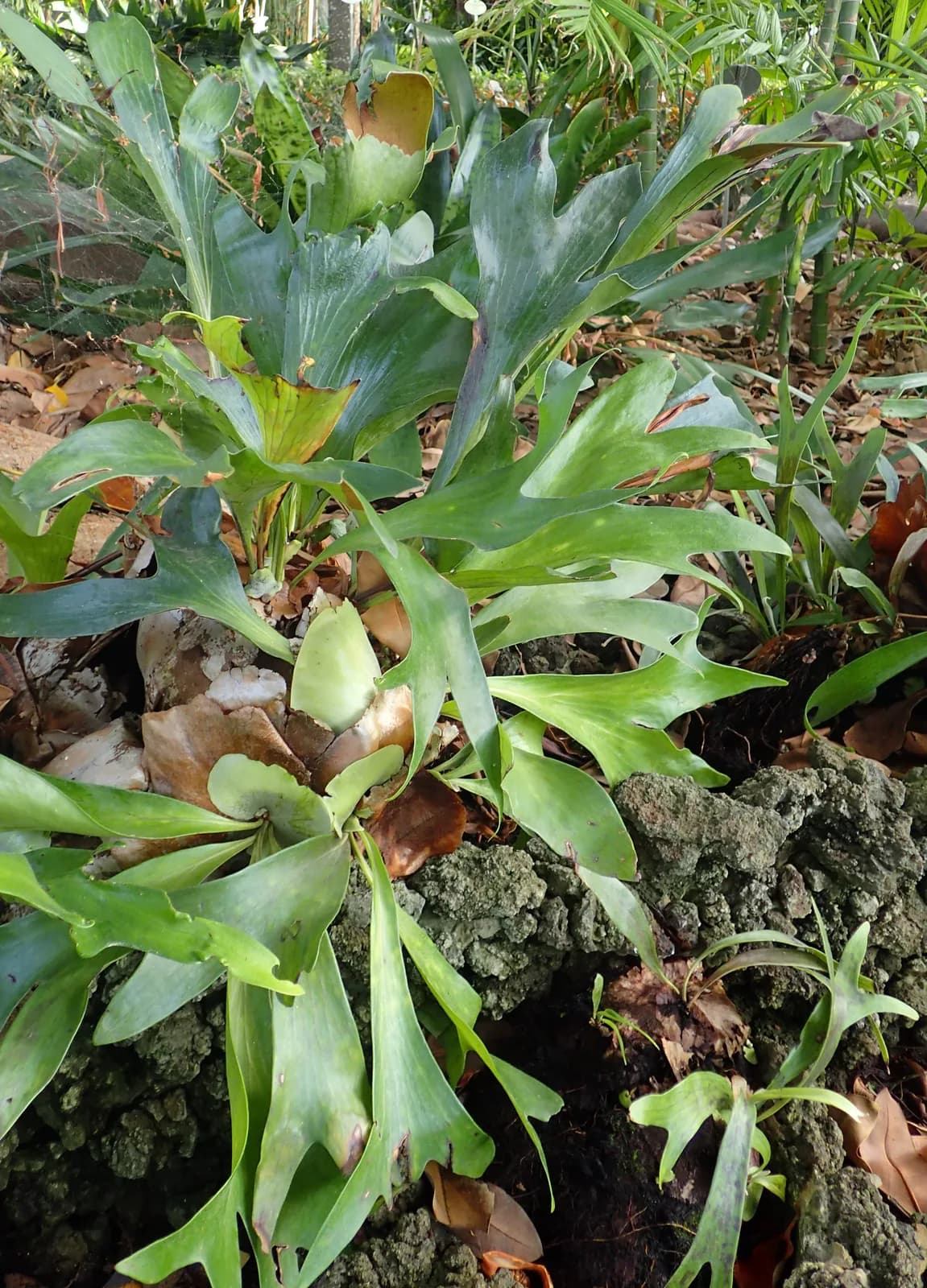
Three signs: roots, fronds, season
Judging whether a staghorn fern is ready to mount comes down to the plant itself, not a date on the calendar.
Roots: Ease the plant partway out of its pot, or check along the pot's edge. If roots have already grown past the medium and darkened where they meet open air — growers often call this "blackened roots showing" — there is enough root mass to carry the plant through the dry-wet swings that follow mounting. A Platycerium's roots do two jobs: gripping the board, and pulling moisture straight from the air. Mount too early, on too few roots, and the plant has to grow new roots and adjust to a new home at the same time, which stacks the risk.
Fronds: Fertile fronds clearly reaching past the rim of the pot, the plant a size larger than its container, is the second signal. It means the roots are already crowding the pot, and leaving it there any longer only forces the habit to bend around the container's shape.
Season: Outdoor temperature and humidity swing more than they do indoors, so pick a stretch of fast growth and mild weather. In Taiwan, early autumn — once the muggy heat has broken — is a common window. Cold snaps and stretches of sustained low temperature are the wrong time to mount, and the wrong time to divide pups too; a plant already has less capacity to recover in the cold, and disturbing it then only adds to the strain.
All three signs are best read together. Judging by just one is how mistakes happen — the roots may be ready, but if a cold front just moved in, it can still wait.
A plant already growing a new shield needs one more thing considered
If a plant has already started unfurling a new shield frond (the "face"), there is one more thing to watch before mounting: which way that new frond is heading. Roots on a freshly mounted plant have not gripped yet, and a new frond will often follow its own momentum forward, wrapping over and burying the growing point — which slows growth further, since the bud loses airflow and light under its own leaf.
If mounting can wait, keep the plant potted and simply trim back whichever new frond is heading toward covering the growing point; nothing else needs touching. If the decision is to mount now, trim the young frond blocking the growing point once mounting is finished, so the bud stays ventilated and lit. If the growing point gets nicked and blackens during the work, do not hesitate — cut the blackened part away cleanly. Left in place, it only keeps rotting outward.
Preparation — tools and medium — is covered in Before You Mount a Staghorn Fern; the hands-on steps are in Mounting a Staghorn Fern Step by Step. Care during the potted stage is covered in Seedling Pot Care.
For a sporeling, collectors use two other words for the same judgement: leaf-change, when juvenile fronds turn into the adult forked form, and rooted in, when a gentle lift does not loosen the plant and the medium holds together. Both have to be true before it goes on a board, and they are asking what the three signs above ask — can the roots carry it, and has the frond shape settled. See pups, sporelings and tissue culture.
FAQ
How can I tell a staghorn fern is ready to mount?
Look for three signs together: roots that have grown past the medium and darkened where exposed to air; fertile fronds clearly past the pot's rim with the plant a size larger than its container; and a season of fast growth and mild weather — early autumn is a common window in Taiwan. Reading just one sign on its own is how mistakes happen.
Can I mount a plant that has already started a new shield frond?
Yes, but the new frond can wrap forward and bury the growing point after mounting, which slows growth. If you hold off on mounting, just trim back any frond heading toward the growing point. If you go ahead and mount, trim the frond blocking the growing point once mounting is done, and cut away any part of the growing point that blackens during the work.
Is it safe to mount or divide pups during a cold snap?
No. A plant's capacity to recover is already lower in sustained cold, so mounting or dividing pups at that point adds strain on top of strain. Wait until temperatures settle and growth picks up again.