Published · Updated
Which Staghorn Fern Should a Beginner Buy First: Choose by Your Environment, Not by Price
No staghorn fern is easy everywhere. Ask three questions first: is there a balcony or a bright window, does air move in summer, will you look at it every day. Balcony with light and airflow points to bifurcatum, hillii and veitchii; an indoor window with a fan to coronarium and willinckii; the collector route runs through a plain willinckii before any named line. And why ridleyi, madagascariense, andinum and quadridichotomum are the wrong plants to learn on.
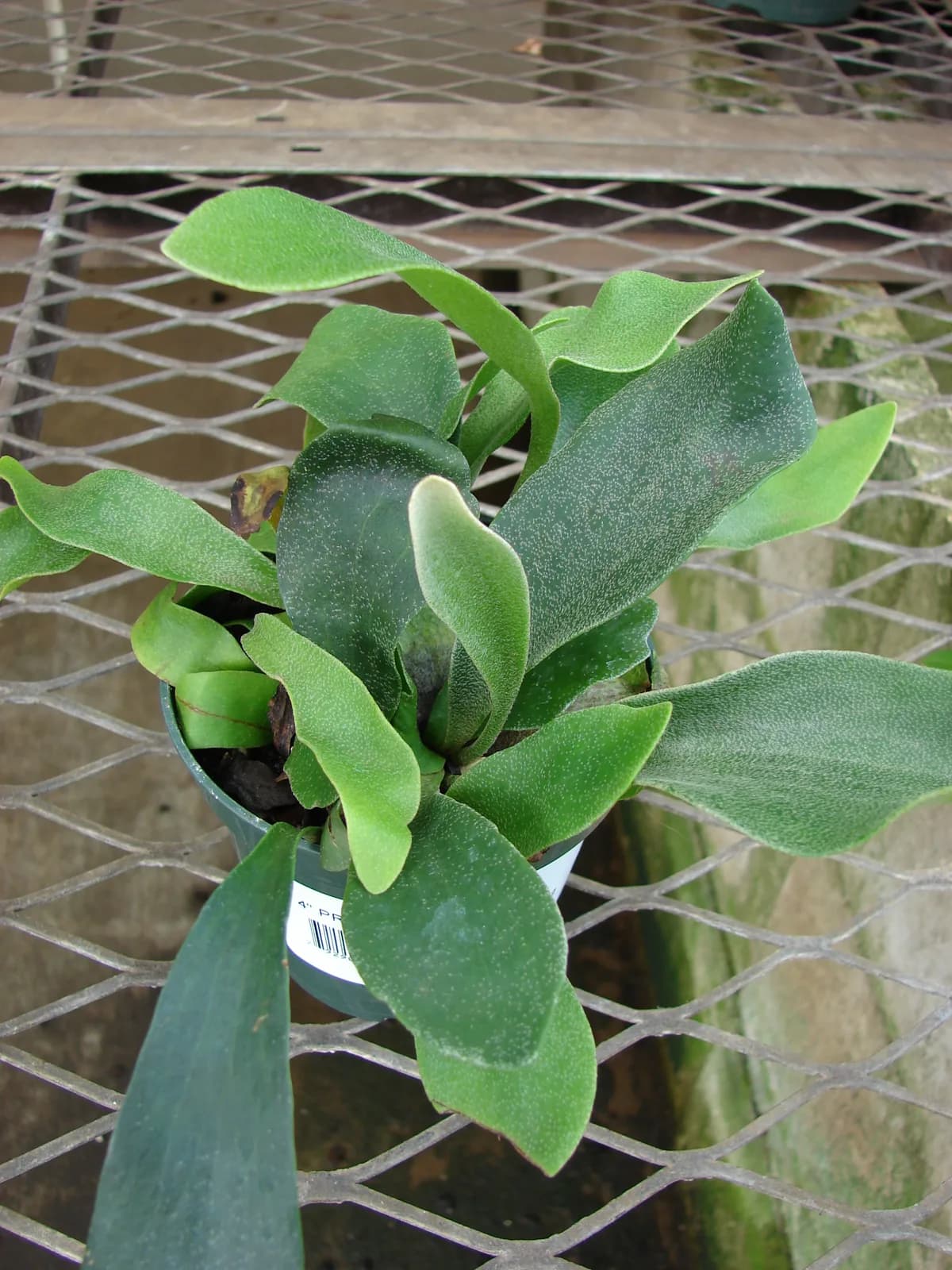
Start with the environment, not the species
The question every beginner asks is which staghorn fern is the easiest. There is no species that is easy everywhere. The same Platycerium bifurcatum that thrives untended on a breezy balcony can rot in a sealed, air-conditioned room. So reverse the order: look at what your home offers first, then find the species that happens to want exactly that.
Three questions to answer honestly
Do you have a balcony or a bright window? Light is the first resource. A balcony with morning sun and afternoon shade is first-class; one bright window is second-class; a room lit only by ceiling lights is not ready yet, unless you are prepared to add a grow light.
Does air move in summer? Staghorn ferns do not mind heat. They mind humid air that stands still. A balcony with natural breeze passes; so does a room where you are willing to run a fan. A closed room without airflow fails, whatever the species.
Will you look at it every day? Some species can be ignored for a week. Others pucker the moment they dry. Answering this truthfully matters more than any species list.
Balcony with light and airflow: bifurcatum, hillii, veitchii
All three are Australian species from habitats with wide day-night swings and mounts that dry quickly after rain. That is why they tolerate light, drought and a fair amount of cold.
P. bifurcatum, the common staghorn fern, is the most forgiving species in the genus. It pups generously, and most sources put its safe minimum around 5 °C. Growing one into a full clump is the best training you can have before collecting anything rare.
P. hillii is close to bifurcatum but darker, glossier and more compact, which suits a small balcony. Two extra cautions: do not let it run hot and dry in summer, and do not leave it cold and wet in winter. Most sources treat about 10 °C as the practical floor.
P. veitchii is among the most sun- and drought-tolerant species; the more light it gets, the thicker its silver coat. It belongs on a balcony, not indoors. In low light it turns green and flops, and it is far more often lost to too much care than to neglect.
Indoor window with a fan: coronarium, willinckii
P. coronarium forgives far more than P. ridleyi: it enjoys heat, its upright shields form a funnel that catches water, it accepts slightly less light, and it pups. The cost is space. Fertile fronds on a mature plant can hang more than a metre, so leave the wall below it clear. Most sources say to protect it below about 12 °C.
P. willinckii tolerates strong light and short droughts and pups freely, which makes it the candidate for your brightest window. It needs more light than coronarium; in a dim room it turns green and stretches. Most sources say growth stops below about 10 °C.
Both need a fan. Indoors, without moving air, every species struggles.
Heading straight for the collector route: willinckii lines, but grow a species first
Dwarf willinckii and the moon series are almost all selections or descendants of P. willinckii, and they are grown exactly like the species. If you know you want to collect, grow one plain willinckii until it puts out new fronds on schedule and starts pupping, then move to named lines. The reason is practical: a named plant's value rests on mother-plant expression and lineage, and a beginner's mistakes are written permanently onto the fronds.
Not for a first plant
P. ridleyi wants a sharp wet-dry cycle, constant airflow and warmth, and never pups. Humid, still air rots the crown, and there is no second chance.
P. madagascariense is the smallest and among the hardest species: it needs constant moisture and constant airflow at the same time. One dry spell puckers the shields and stalls the growing point.
P. andinum is the only species from the Americas. It sits in a narrow band of humidity and temperature, and reliable growing information is thin.
P. quadridichotomum comes from a climate with a dry season and goes dormant in the cold. Dormant plants want barely damp moss, never a full soak, and a beginner cannot easily tell a sleeping plant from a dying one.
None of these is impossible. They are simply the wrong plants to learn on.
Once you have chosen
Keeping it alive, which form to buy (sporeling, pup or mounted plant) and the first month at home are covered in are staghorn ferns hard to grow.
LDS began as a nursery growing in-house from spore. Raised from a sporeling is how we see every plant we raise: mounted specimens for people growing their first, sporelings for people willing to wait. Not mass-produced. Cultivated.
FAQ
Which staghorn fern should a beginner buy first?
Start from your environment. A balcony with light and airflow suits Platycerium bifurcatum, hillii or veitchii, all drought-tolerant Australian species; a bright indoor window with a fan suits coronarium or willinckii. Bifurcatum is the most forgiving, with a safe minimum around 5 °C in most sources, and growing it into a clump is the best training. Choose by what your home offers, not by price.
Can I grow a staghorn fern indoors with only a window?
Yes, on two conditions: the window must be genuinely bright, and a fan must run. Platycerium coronarium accepts slightly less light and its shield funnel catches water, so it is the safer indoor start, though mature fertile fronds hang more than a metre and need room. Willinckii needs your brightest window or it turns green and stretches. A room lit only by ceiling lights needs a grow light first.
Why is Platycerium ridleyi not recommended for beginners?
Ridleyi wants a sharp wet-dry cycle, constant airflow and warmth, and it never pups. In humid, still air the crown rots within days and there is no second chance. It is not impossible, but every judgement has to be right the first time. Learn watering and airflow on bifurcatum or coronarium first; ridleyi afterwards is a different proposition.
Can a beginner start with a dwarf willinckii or other named cultivar?
Grow a plain Platycerium willinckii first. Dwarf willinckii and the moon series are selections or descendants of the species and are grown the same way; the difference is that a named plant's value rests on mother-plant expression and lineage, and beginner scorch or water damage stays on the fronds permanently. Once a species willinckii is producing new fronds and pups on schedule, move to named lines.
Related species