Published
Crispy Frond Tips on a Staghorn Fern: Light, Water or Humidity?
Crispy frond tips are not the classic sign of too little light — etiolation is. Tip burn traces to low humidity, underwatering, too much sun, or fertiliser burn, and shows first on lower, older fronds. What actually raises indoor humidity.
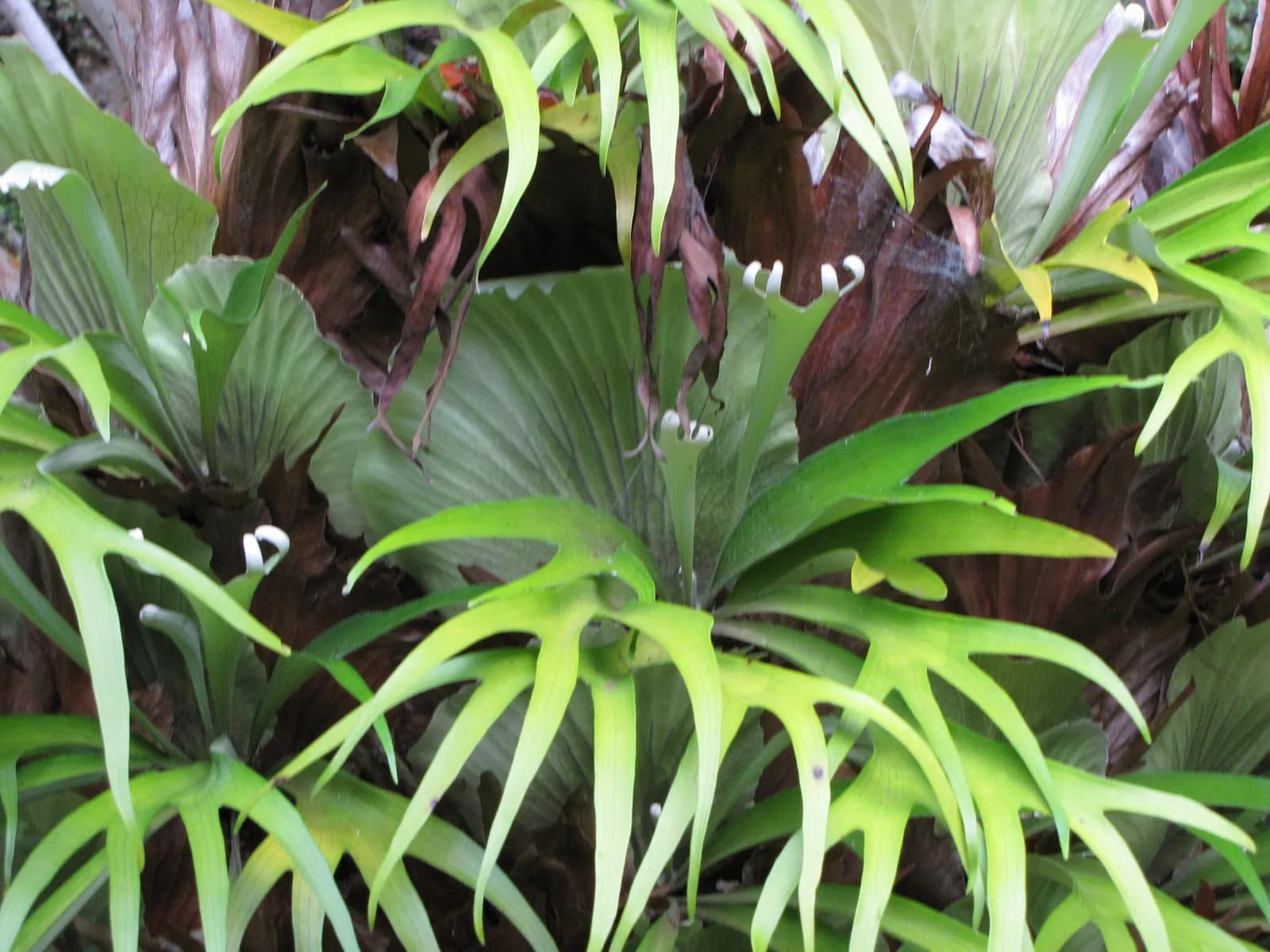
Crispy Tips Are Not the Classic Sign of Too Little Light
When a fertile frond starts browning and crisping at the tip, most beginners assume "the grow light isn't reaching it." But the classic sign of insufficient light is actually etiolation: fronds stretch out, droop, and the silvery stellate hairs fade toward green — not crispy tips. Crispy tips point to something else entirely: transpiration outpacing what the roots can supply, so the plant rations its limited water toward the growing point and new growth, leaving the tip — farthest from the roots — to go first.
Four Common Causes
Low ambient humidity is the most common cause indoors. A room running air conditioning for long stretches often sits below 50% relative humidity, and species that evolved in humid understories — crown fern, staghorn ridleyi, madagascariense among them — show it first at the tips. Medium that has dried out completely while watering continues on the old schedule is the second cause; sphagnum past a certain point of dryness stops absorbing water altogether, so watering on the usual calendar no longer actually delivers any. Too much direct sun or grow-light intensity is the third, usually paired with bleached patches across the frond surface, not tip browning alone. Over-fertilising is the fourth; fertiliser burn tends to leave a sharper, more clearly defined edge, and new growth is affected too, not just older fronds.
Why Lower, Older Fronds Go First
A drooping older frond sits farthest from the roots, with the longest path for water to travel, so it's naturally the first to show a shortfall — faster still if it happens to sit in the direct path of an air conditioner or fan. Fertile fronds also brown from the tip as part of normal ageing on their way out; if the affected area stays small and new growth keeps coming normally, there's nothing that needs fixing.
Humidity That Actually Works
A cup of water set beneath the plant raises humidity across a tiny radius at best — a supplement, not a fix on its own. What actually helps: moving humidity-loving species away from AC or fan airflow; grouping them together so their combined transpiration builds a locally humid pocket; running a humidifier alongside a hygrometer so you're reading a number instead of guessing; and keeping the medium lightly moist rather than letting it dry out completely before the next watering. Airflow still has to keep moving alongside the added humidity — high humidity without ventilation is exactly how root rot and shield rot set in. Tips that have already crisped won't recover; leave them or trim them, then watch how the next round of new growth responds once conditions improve.
For telling water stress apart from light stress, see Frond Diagnosis; watering rhythm is covered in How Often to Water; light needs are covered in Light and Sun Exposure.
FAQ
Does crispy tip burn always mean humidity is too low?
Not necessarily. There are four common causes: low ambient humidity, a medium that's dried out, too much sun or light, and over-fertilising. Humidity is only one of them — rule out the others before treating for it specifically.
Why do lower, older fronds brown first?
A drooping older frond sits farthest from the roots, so water has the longest path to travel and shows a shortfall first — faster still if it sits in the path of an air conditioner or fan.
Does a cup of water under the plant raise humidity?
Only across a tiny radius. More effective: move the plant away from AC or fan airflow, group plants together, run a humidifier with a hygrometer, and keep airflow going to avoid root rot.