Published · Updated
Getting Staghorn Ferns Through a Hot, Humid Summer: Shade, Fans, Watering Time and Which Species to Pull First
From July to September Taiwan sits around 35 °C by day, nights refuse to cool, and an afternoon storm turns the balcony into a steam room. Most Platycerium do not fear heat; they fear heat with no airflow. Shade in rough percentages, where to point the fan, why not to water in the afternoon, and which species stay put and which move indoors first.
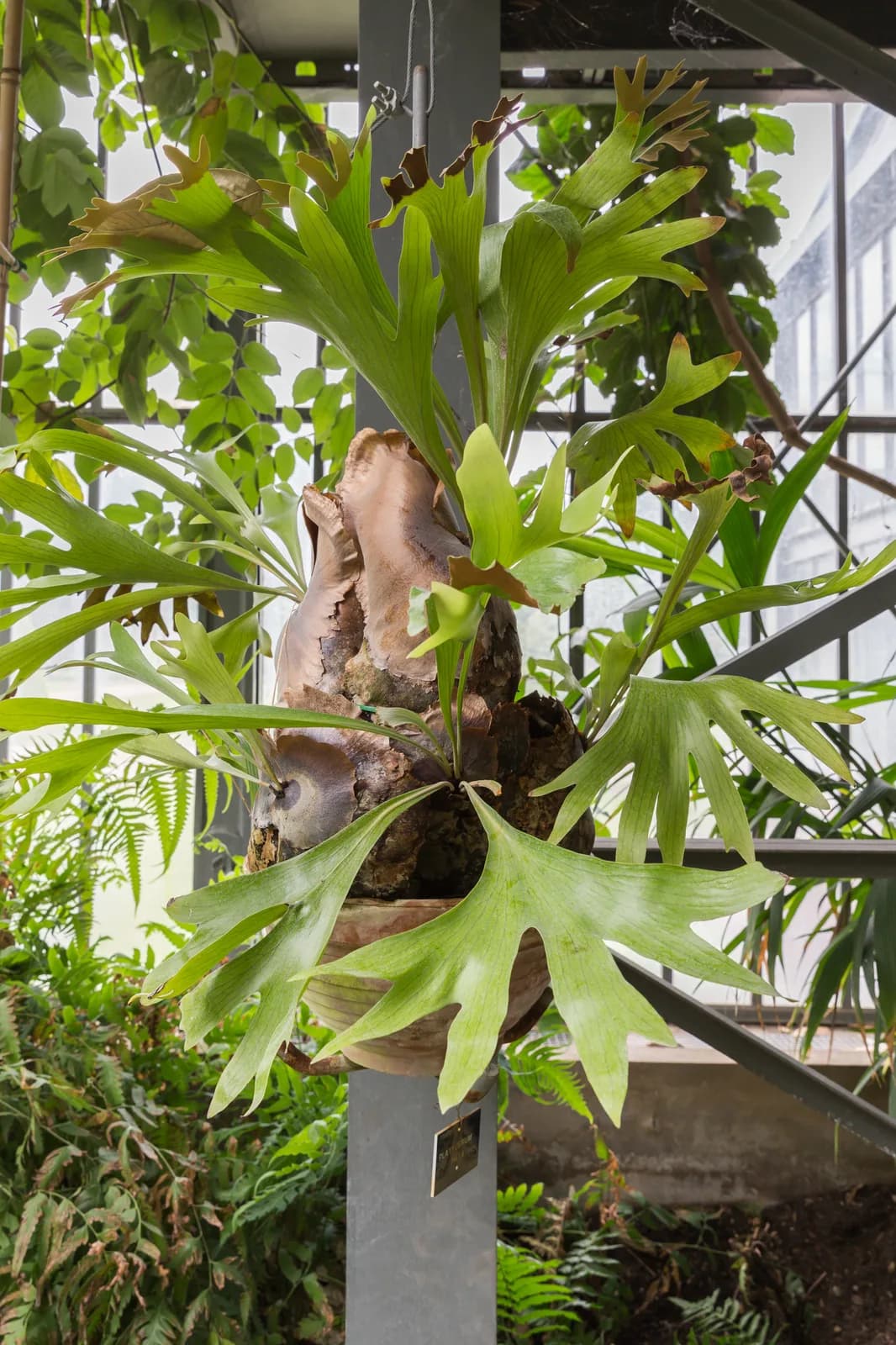
Taiwan's summer tests airflow, not heat
From July to September the days sit around 35 °C, nights rarely drop below 28 °C, humidity runs at 70–80%, and after an afternoon thunderstorm a balcony turns into a steam room. Most staghorn ferns are tropical, so heat on its own is not the problem. Heat plus humid air that never moves is. In that combination the medium cannot dry, the fronds cannot shed heat, and the growing point stays wet for hours at a time. Most summer crown rot happens in exactly these weeks. The summer job has three parts: less light, more air, and water at the right hour.
Shade: say roughly, never exactly
Midday sun in a Taiwanese summer is too strong for most Platycerium. Outdoors, most sources suggest shade cloth of roughly 50%; heat-sensitive and understorey species take around 50–70%; sun-loving species such as P. willinckii and P. bifurcatum can take less. Shade is not only about scorch. It lowers the temperature of the board and the medium. A translucent awning, the canopy of a large tree, or an east-facing balcony all work as natural shade. Indoors, a sheer curtain on a bright window is enough. A board hung on a west-facing concrete wall soaks up heat all afternoon and radiates it back at night; move it, or shade the wall. Take the shade cloth down in winter so the plant gets its light back.
Read the plant, not the label. Scorched frond tips and bleached shields mean too much light; stretched, drooping fronds and silver turning green mean too little. In summer, err on the dim side and bring the light back in autumn.
Fans: placement matters more than power
A fan is the most important piece of summer equipment, but not aimed straight at the plant. Direct wind dries fronds and medium too fast, especially on small or newly mounted plants. Point the fan at a wall or the ceiling so the whole room circulates, or use oscillation to sweep across the plants. The test is a faint tremble in the fronds and air you can feel on your hand in front of the board. Spacing matters too: plants hung shoulder to shoulder sit in still air even with a fan running, so before summer stagger them up and down and leave a gap around each one. Do not switch it off at night; Taiwanese summer nights do not cool down, and stagnant night air is the main cause of rot. A humidifier in a closed space without a fan only builds a steam cabinet.
Watering: never in the afternoon
Water in the morning or in the evening, never in the heat of the afternoon. Water left sitting on the fronds under a hard sun is often where the first scorch mark appears, which is why watering waits until after sundown. Water poured onto a hot board warms up within minutes, and the roots sit in a warm bath. If you water in the evening, make sure the board gets moving air before dark. Run off the first stretch of water from a hose that has sat in the sun all day; it comes out hot, and seedlings take it far worse than mounted adults. Soaking the whole mount beats misting the fronds; soak, drain, rehang. Frequency is read from the medium, not the calendar: water when the board feels light and the surface of the sphagnum turns pale. If the board is still heavy in the morning, skip the day. A medium that stays wet in hot, still air is the commonest summer death. Halve the feeding or stop it; roots take up little in extreme heat and fertiliser becomes a burden.
Which species to move first
Heat-tolerant bifurcatum, willinckii and coronarium can stay put with good airflow and shade; madagascariense, andinum and quadridichotomum should be in an air-conditioned room with a fan before July; superbum and wallichii stall in the heat, which is dormancy, not death. Species by species: which staghorns to move first in summer.
Should you buy in summer?
Sporelings have a high mortality rate on a hot balcony, so if you buy in summer, choose a plant with settled roots and real size. A plant that gets through its first summer and comes out acclimatised is much easier the second year, and autumn is the fastest-growing season. More in starting with your first plant.
The daily summer check
Three things: is the growing point firm, is the medium too wet, is air moving over the fronds. Once a week, turn up the shield rims and look for scale; pests follow the heat. Summer is not the season for growth, it is the season for holding steady. Bring the plant safely to October and autumn growth will make up the difference. A plant raised from a sporeling has truly settled only once it has passed its first Taiwanese summer.
FAQ
Can a staghorn fern spend the summer in an air-conditioned room?
Yes, and heat-sensitive species should. Three rules: keep the plant out of the direct cold stream, run a fan so the air circulates, and put humidity back for species like madagascariense. The risk indoors is drying rather than stagnation, so feel the medium before you stretch the watering interval.
How much shade does a staghorn fern need in summer?
Most sources suggest roughly 50% outdoors, around 50–70% for heat-sensitive and understorey species, and less for sun-lovers such as willinckii and bifurcatum. Adjust to the plant: scorched tips and bleached shields mean more shade; stretched fronds turning green mean less. Err dim in summer and restore light in autumn.
How often should I water a staghorn fern in summer?
There is no fixed number of days. Read the medium: soak when the board feels light and the sphagnum surface turns pale, in the morning or evening and never in the afternoon. In a well-ventilated spot most sources land around every three to five days; in a hot, still spot the interval should be longer, not shorter.
Should the fan blow directly on my staghorn fern?
No. Aim it at a wall or the ceiling so the whole space circulates, or let it oscillate across the plants. The test is a faint tremble in the fronds and air you can feel in front of the board. Leave it on overnight; Taiwanese summer nights do not cool, and stagnant night air is the main cause of crown rot.
Related species