Published
How to Keep Platycerium ridleyi and P. madagascariense from Rotting: Airflow, Watering Rhythm and Medium, Taiwan Edition
Platycerium ridleyi and P. madagascariense are the two species Taiwanese collectors lose most often, and almost always to crown rot. Too much water is not the explanation. Take apart the four real causes, then walk through plum rain, high summer and the air-conditioned room, and the care for each species becomes clear.
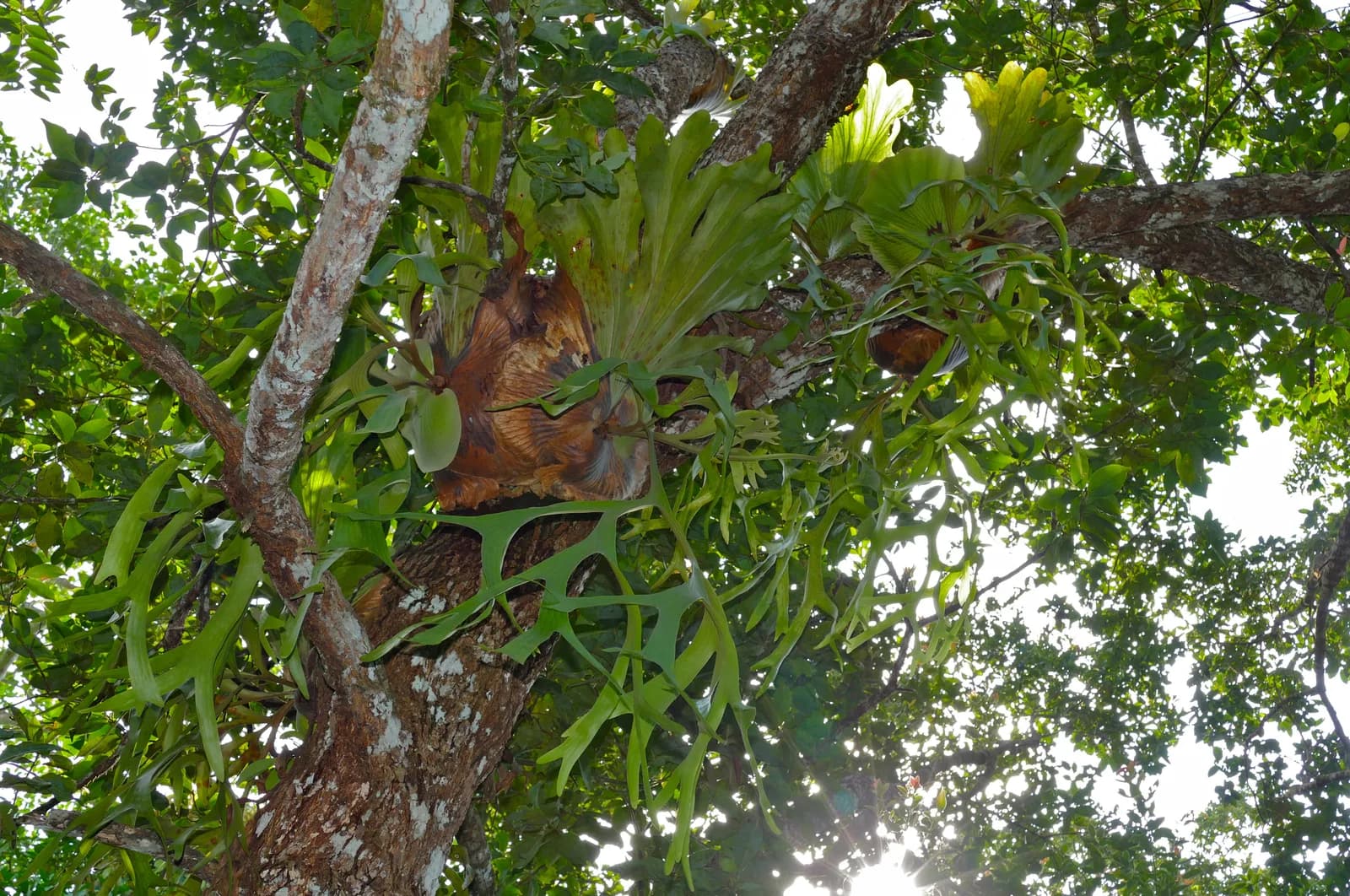
Rot does not happen overnight
Platycerium ridleyi and P. madagascariense are the two species Taiwanese collectors lose most often. The ending looks the same: the growing point turns black, the shield frond softens from the centre, and the plant collapses within days. The process, though, started weeks earlier. Rot is not explained by the phrase too much water. It is four things stacked together: a medium that never dries, air that never moves, a medium that holds too much, and water pooled where the shield fronds close. Take them apart and the fix for each species becomes clear.
First, tell them apart: ridleyi hates stagnant damp, madagascariense hates heat
P. ridleyi lives high in the canopy of lowland South-East Asian forest, in bright light and constant wind. Its shield fronds close into a ball, and if water sits in that ball with no air moving, the growing point suffocates. Ridleyi wants a wet-dry cycle: let the mount dry most of the way, soak it, then let it dry again quickly. Most sources put its humidity range at roughly 60–80%, always with airflow.
P. madagascariense lives in the understorey of eastern Madagascar, in even, cool, misty conditions. It must never dry out; once it does, the shields pucker and the growing point stalls. Its usual killer is not water but heat. Most sources agree that sustained temperatures above about 30 °C with still air stop growth first and rot the crown next.
One line to remember: ridleyi wants clear wet-dry swings and strong air; madagascariense wants steady slight moisture, cool temperatures and gentle air. The one enemy they share is stagnant, humid air.
Four causes, four fixes
Pooled water. Mount ridleyi with the growing point upright and tilted slightly forward so water runs out of the ball. Water from the side or soak the whole board; never pour into the crown. Madagascariense has flat shields and pools less, but do not let water sit between the shield and the board.
Still air. A fan matters more than a humidifier. It does not need to blow directly on the plant; keeping the room's air moving is enough, and a faint tremble in the fronds is the right strength. A sealed terrarium with no fan is the most common way to lose a madagascariense.
A medium that holds too much. Ridleyi takes less sphagnum than most other staghorn ferns, opened up with bark or tree-fern fibre; use a slatted or tree-fern board. Madagascariense can sit in mostly sphagnum, but keep it loose and unpacked. Moist is not the same as waterlogged.
Water trapped between shields. Old and new shield fronds on ridleyi form a pocket, and after a soak that pocket must drain on its own. A board hung vertically with a slight forward lean does more than any fungicide applied afterwards.
Three Taiwanese situations
The plum-rain season, roughly May to June. Humidity above 90% for days, dim light, no wind. Ridleyi: stretch the watering interval, soak only when fully dry, fan on all day. Madagascariense: the mount barely dries anyway, so hold it just damp and put your attention on airflow and light; do not mist the fronds. Check both growing points daily.
High summer, roughly July to September. Days at 35 °C, nights near 30 °C. Ridleyi tolerates heat better than madagascariense; with airflow and roughly 30–50% shade it usually passes, watered in the morning or evening and never in the heat of the afternoon. Madagascariense is in its danger period. Many Taiwanese growers move it into an air-conditioned room or a fan-cooled cabinet, shade it around 50–70%, keep the sphagnum evenly damp and stop feeding.
The air-conditioned room. Dry air, moving air, steady temperature. That suits ridleyi well; keep it out of the direct cold stream and lengthen the watering interval. Madagascariense needs the humidity put back: a humidifier plus a fan, or a stand over a water tray without touching the water. The risk in an air-conditioned room is not rot but drying, and madagascariense is the one that will show it first.
When you see the signs
Brown edges on a shield frond are ageing, and normal. A whole patch turning soft, black and sour-smelling is rot. Stop watering, add air, move the plant to bright filtered light and tip out any standing water. A plant whose growing point is already soft and black rarely recovers. A plant with a rotten patch on the shield but a firm growing point usually pulls through if you cut away the rot and let it dry in the shade.
Ridleyi never pups, so each plant is the only one of itself, and a stable environment is the only way to keep it. Madagascariense pups, and a settled colony is its own evidence of mother-plant expression. We raise both from sporelings and establish them in Taiwan's own climate before they leave us. Not mass-produced. Cultivated.
FAQ
Which is more heat-sensitive, Platycerium ridleyi or P. madagascariense?
Madagascariense. Most sources put its stall-and-rot threshold at sustained temperatures above about 30 °C with still air. Ridleyi tolerates heat better; what it cannot stand is stagnant damp. In a Taiwanese summer, madagascariense goes into the air-conditioned room first, while ridleyi usually passes with airflow and shade.
How often should I water Platycerium ridleyi?
There is no fixed number of days. Soak when the mount is most of the way dry and feels light, then make sure it dries noticeably within a day or two. Stretch the interval in the plum-rain season; in summer water in the morning or evening, never in the afternoon. For ridleyi, moving air matters more than humidity.
Can I keep Platycerium madagascariense in a sealed terrarium?
Not without a fan. Madagascariense wants high humidity, but it needs moving air even more, and a sealed, still terrarium is the most common way to lose it. If you use an enclosure, add a small fan and a vent, and keep the inside from sitting above about 30 °C.
The growing point has turned black. Can the plant be saved?
If the growing point itself is soft and black, rarely. If only part of the shield has rotted and the growing point is still firm, cut away the rot, stop watering, add airflow and let it dry in the shade; it usually pulls through. Prevention beats rescue every time: air, a wet-dry rhythm and the right medium.
Can ridleyi and madagascariense live in an air-conditioned room?
Yes. Dry, moving, stable air suits ridleyi; just keep it out of the direct cold stream. Madagascariense needs the humidity put back with a humidifier and fan, or a stand over a water tray. The risk in an air-conditioned room is drying, not rot, and madagascariense shows it first, so check the medium before watering.
Related species