Published
Staghorn Fern Not Growing Fertile Fronds? A Cause-by-Cause Checklist
A staghorn fern that only grows shield fronds and never a fertile frond is rarely sick. It is following a simple order: secure the roots and the shield first, invest in fertile fronds later. Work through water, light, recent mounting, season and feeding in sequence, plus species-level differences and the point where you should actually worry.
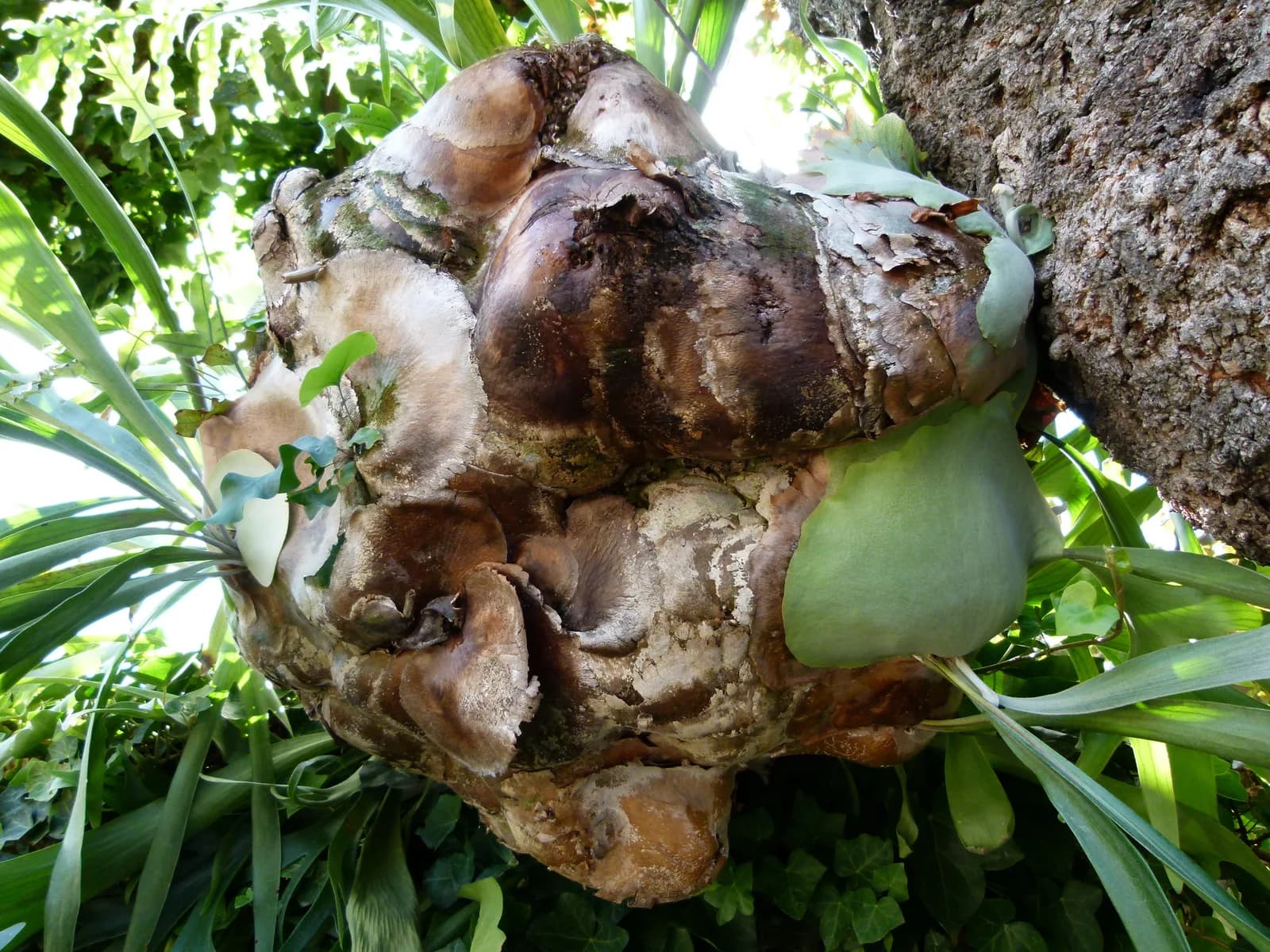
Shields come first; fertile fronds are an investment
Most growers who ask "why does my staghorn fern only grow shield fronds, where are the fertile fronds" are not looking at a sick plant, just one working through an order of operations. The shield frond secures the plant to its mount and stores water: it is survival infrastructure. A fertile frond is a reproductive investment, and the plant only funds it once the roots and shields feel stable. A newly mounted plant, a pup just separated from its mother, or a potted sporeling growing nothing but shields for a season or two is normal, not a sign that something is wrong.
Before worrying, work through the checks below in order rather than guessing at a single cause.
Check one: has it been running dry
This is the single most common cause. Misting without ever soaking, letting the interval between waterings run long, or a mount that stays light in the hand all push a plant to spend its limited water on the shield and cut the fertile-frond budget entirely. Re-check the routine against How Often to Water a Staghorn Fern; many growers find fertile fronds are the first thing to respond once watering is corrected.
Check two: not enough light, or light that is too diffuse
Low light stretches the whole plant thin, leaving shields soft and fertile fronds stalled. Light that is too diffuse, such as indoor ambient brightness with no real window of direct or strong filtered sun, reads to the plant as an unfinished environment, so it keeps investing in the shield alone. Light and Sun Exposure for Staghorn Ferns is worth revisiting to establish one clear bright window in the day, rather than dim brightness all day long.
Check three: was it recently mounted, remounted, or separated as a pup
While the roots are re-establishing in the medium, the plant instinctively funds the shield and root system first and puts fertile fronds well down the list. A pup fresh from division or a plant that has just gone through remounting growing nothing but shields for a season or two is expected; adding extra water or fertiliser to force the issue does not speed it up.
Check four: the season is holding it back
Summer heat and humidity, and winter cold snaps, both push a staghorn fern to pause investment in fertile fronds and simply hold on. Cool and ventilate through the summer following Summer Heat and Humidity Care, protect through cold snaps following Winter Cold Snap Care, and once temperatures settle, fertile fronds often arrive in a burst after early autumn, which is fertile-frond season for many species.
Check five: feeding has not kept pace
A long stretch with no feeding leaves a plant with just enough reserve for shields and roots, none left over to invest in fertile fronds. The opposite problem, feeding too high in nitrogen combined with frequent watering, tends to push out shields that are thin and loosely formed instead, with fertile fronds still stalled. Recheck frequency and ratio against Fertilizing and Banana Peels.
Some species simply run slower
Certain wild species are naturally slow, or follow their own dormancy logic, so it is not fair to compare their pace to other species. Single-crown, spore-only species such as P. ridleyi and P. wandae need to build a real structural base before a fertile frond appears at all, and taking longer than a multi-crown, pupping species is entirely normal. P. elephantotis and P. wallichii, by contrast, go dormant in cold weather along with their shields, curling and shedding fertile fronds in the process; that is a seasonal pause, not a failure to grow.
When it is actually worth worrying
If shield frond growth stalls too, each new shield comes out smaller than the last, or the growing point turns black and soft, that is no longer a case of "the fertile fronds just haven't had their turn." Work through Frond Diagnosis: Black, Yellow, Brown to check the roots and growing point instead. As long as new shields stay healthy and each one is larger than the one before, fertile fronds will come in their own time.
One habit
When all you see is shields, do not reach for a diagnosis right away. Check whether the roots have gripped the medium first, then revisit whether water and light have actually been sufficient, and only then consider feeding. Get the order right, and fertile fronds tend to show up when you are not watching closely for them.
FAQ
How long after mounting will a staghorn fern produce fertile fronds?
There is no fixed timeline; it depends on how quickly the roots grip the mount, usually one to two growing seasons. Only shields during that window is normal, and forcing extra water or fertiliser will not speed it up and can stress the roots instead.
If I only mist and never soak, will my staghorn fern refuse to grow fertile fronds?
Yes, this is one of the common causes. Misting wets the surface but leaves the interior of the moss dry, keeping the plant on the edge of dehydration, and it responds by protecting the shield over everything else. Switching to regular soaking so the moss is truly saturated is often the fastest fix, and fertile fronds are usually the first thing to respond.
My staghorn fern lost all its fertile fronds. Will new ones grow back?
In most cases, yes. Cold- or heat-triggered dormancy causes fertile fronds to curl and drop, and as long as the growing point stays firm and the shield fronds keep growing normally, new fertile fronds return once the season passes, with no special intervention needed.
Related species