Published
Five Beginner Staghorn Fern Mistakes: Water, Light, Airflow, Pests, Fertiliser
Almost every problem in a beginner's staghorn fern collection comes down to five things: water, light, airflow, pests and fertiliser. Here is the opposite watering logic for mature plants and sporelings, grow light wattage and angle, humidity in an air-conditioned room, dealing with mealybugs and fungus gnats, and a potassium-forward, nitrogen-light feeding rule, with one order to check when growth stalls.
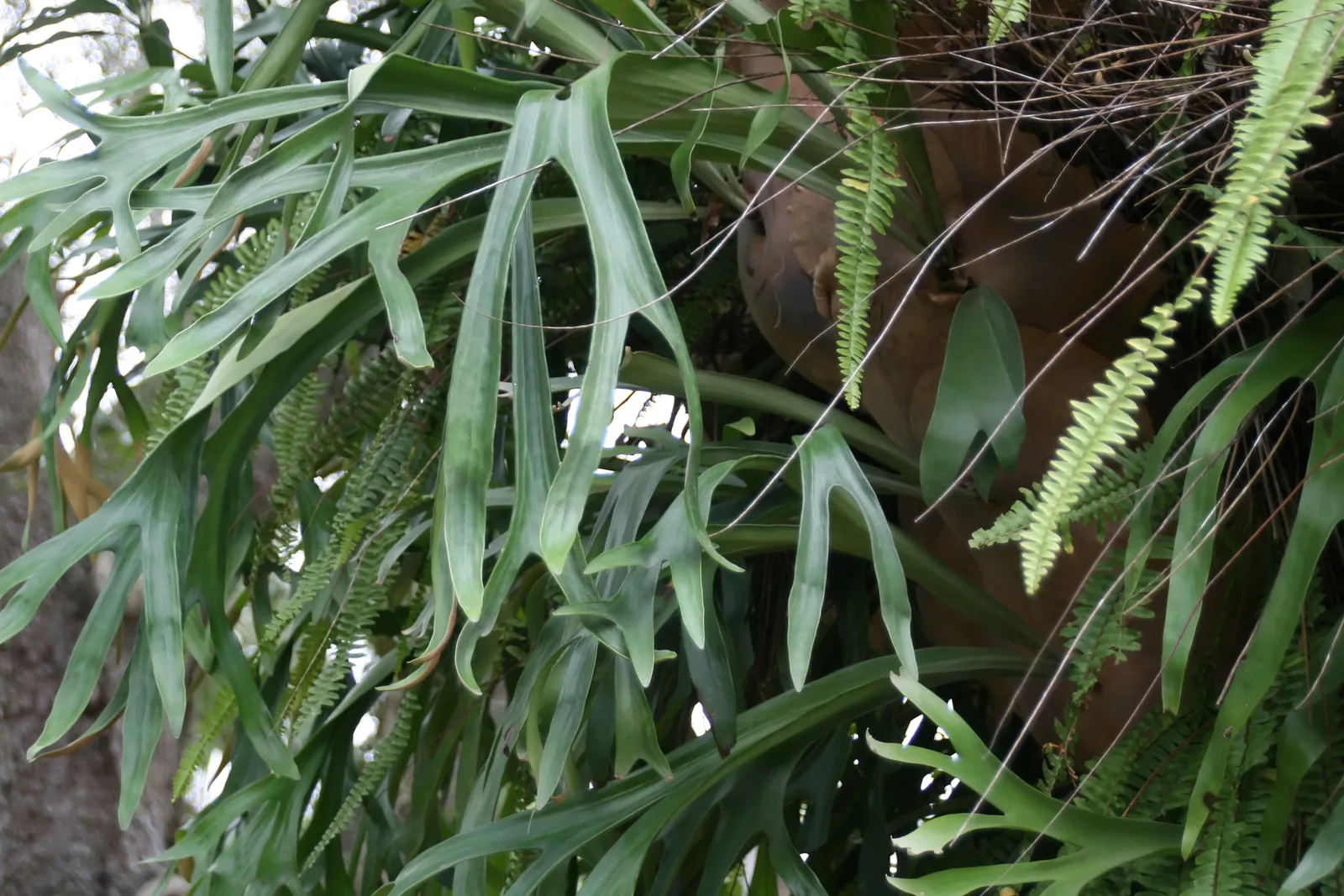
Nine problems out of ten come down to five things
New growers often feel overwhelmed by conflicting advice. In practice, nearly every problem in a beginner's collection traces back to one of five things: water, light, airflow, pests, and fertiliser. Check them in order and the cause is usually easy to find, without working through every possibility in your head.
Water: more plants drown than dry out
A staghorn fern is not the shade-loving, always-damp fern people expect. It wants airflow paired with a wet-dry cycle, and nine times out of ten a struggling beginner plant has been overwatered, not underwatered. For a mounted mature plant, the rule is to let the sphagnum dry out fully before watering again: submerge the whole board for three to five minutes, up to ten is fine. The worst habit is a quick dip that wets only the surface; damp outside, dry inside, held for weeks, does more damage than letting it go properly dry. See How Often to Water a Staghorn Fern for the detail.
Sporelings work the opposite way. With so little root, they have almost no tolerance for a full dry-down or a full soak; water a little once the moss is roughly eighty to ninety percent dry, keeping the swing between wet and dry narrow rather than stretching the interval.
Light: wattage and angle matter more than the price tag
The most common mistake with an indoor grow light is running too low a wattage; pull the light back a little further and the intensity drops below what the plant needs, and it stalls for a year. Angle it from about forty-five degrees in front rather than straight overhead, since direct overhead light alone tends to draw the growing point inward. Reading the frond surface gives a rough guide to a species' light needs: thick white hair and fleshy fronds usually tolerate bright light, while thinner, less hairy rainforest species such as P. ridleyi and P. coronarium are, in most sources, better started in lower light and adjusted from there. See Light and Sun Exposure for more detail.
On a balcony, avoid the midday sun, especially from May through October. Taiwan's summer heat and humidity already stress a plant on their own; add direct sun and it is stress twice over.
Airflow: correct temperature and humidity are not enough without it
Even a small indoor room with the right temperature and humidity will slowly weaken a plant if the air never moves. Without fresh air exchange, moisture cannot evaporate properly from the fronds, and the still, stuffy conditions work against both the roots and the growing point. A circulating fan is the simplest fix for any space without natural airflow, and it does more good than upgrading the light or the fertiliser. In an air-conditioned room, watch humidity separately: air conditioning strips moisture from the air, and once humidity drops too low the plant closes its stomata to conserve water, which stops photosynthesis no matter how bright the light is. A humidifier keeping the room between fifty and sixty-five percent humidity solves this.
Pests: deal with one or two before they become a colony
Mealybugs are the most common pest. Pick off and wipe away the honeydew the moment you see one or two; left alone, they cover a whole frond and bring on sooty mould, and the only fix left is cutting the frond off entirely. The real control point is ants, since they farm and spread mealybugs; cut off the ant traffic and the spread slows considerably. Fungus gnats around the medium respond well to a few sticky yellow traps hung nearby, and numbers usually drop noticeably within days. Sowbugs and millipedes in the sphagnum do not harm the plant and are nothing to worry about. For a stubborn mealybug problem, ask a garden supplier about a systemic insecticide and follow the label dilution; there is no need to spray each individual insect. If fronds look off in ways that do not match a pest, cross-check against Frond Diagnosis: Black, Yellow, Brown to rule other causes out first.
Fertiliser: little and often, slightly higher potassium, slightly lower nitrogen
As an epiphyte, a staghorn fern in the wild survives on the small amount of nutrition rain washes out of bark crevices, so it needs less fertiliser than most houseplants, and the ratio matters more than the amount. For thick fronds, a compact habit and readier pupping, choose a fertiliser slightly higher in potassium and lower in nitrogen; too much nitrogen produces fronds that are long, thin and loosely arranged. The working rule is little and often: a touch of liquid fertiliser in the soak water most times, with a plain water soak now and then during the frequent watering of summer to dilute any build-up. Fertiliser burn typically takes three to six months to grow out, so hold back before the growth surge from winter into spring; burning a plant there wastes the whole growing season. For a gentler, natural supplement see Fertilising and Banana Peels.
One order to check
When a plant stops growing or starts to decline, check water, light, airflow, pests and fertiliser, in that order. Most of the time the issue is not something missing, it is one of the five given too generously.
FAQ
What is the most common beginner mistake with staghorn ferns?
Overwatering. Most struggling beginner plants have been drowned, not dried out: a mature mount should dry fully before the next soak, while a sporeling needs a narrower wet-dry swing rather than a full dry-down. Other common mistakes, in order, are underpowered grow lights, poor airflow, ignoring early pests, and fertilising too strong.
Why does my staghorn fern under a grow light stop growing?
Usually low wattage or the wrong angle. Pulling the light back drops the intensity below what the plant needs and it stalls for a year; lighting only from directly overhead also tends to draw the growing point inward. Switch to about forty-five degrees in front and raise the wattage for the distance, and most plants respond within weeks.
What should I do about mealybugs on a staghorn fern?
Pick off one or two the moment you spot them and wipe away the honeydew, and cut off ant access at the same time, since ants farm and spread mealybugs. Left alone they cover a whole frond and bring on sooty mould. For a stubborn case, ask a garden supplier about a systemic insecticide and follow the label dilution.
Related species